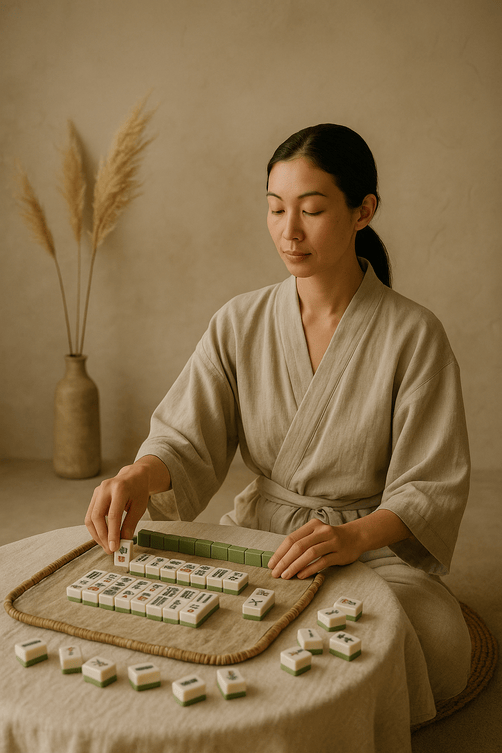
The Zen of Mahjong: Finding Calm in Every Match
One quiet morning, I opened a Mahjong board just to clear my head. The city outside buzzed with noise, but within minutes, all I could hear was the soft rhythm of tiles clicking together. Every match felt like a breath — inhale, focus, exhale, release. By the time I finished, my mind was still, and the world felt a little lighter. That’s when it hit me: Mahjong isn’t just a game. It’s a kind of Zen practice — a moving meditation of focus and flow.
The Philosophy Behind the Tiles
At its heart, Mahjong is about harmony — between attention and patience, logic and intuition. In Zen, this balance is called shoshin — “beginner’s mind.” It means approaching every situation with curiosity, openness, and calm, just as you approach a new board of tiles.
When you play a relaxing mahjong puzzle, you’re not rushing to finish; you’re exploring patterns, noticing details, and staying fully present. Each click of a matching pair is a small act of mindfulness — clearing not just the board, but your thoughts.
Flow: The Mahjong State of Mind
Psychologists call it “flow,” Zen masters call it “no-mind.” Both describe the same thing: being so immersed in the moment that effort disappears.
In Mahjong, flow happens when:
You’re fully focused, but not tense.
You act quickly, but without rushing.
You think clearly, but without overthinking.
Try it next time you play Turtle Mahjong or Timer Mahjong. The goal isn’t speed — it’s grace. Notice how, as your moves become smoother, your breathing naturally syncs with the rhythm of the tiles.
The Art of Letting Go
In Zen, impermanence is a core lesson — everything changes, everything passes. The same is true in Mahjong. You can’t control the tiles that appear, only how you respond to them.
That moment when a perfect match disappears from the board? It’s a reminder that nothing stays forever — and that’s okay. Each move opens something new.
So, when you play a free mahjong game, practice letting go: of frustration, of impatience, of the need to win. The joy is in the process, not the result.
A Simple Mahjong Meditation
Before your next game, try this short centering ritual:
Sit comfortably and take three slow breaths.
Open your layout — perhaps mahjong 3D online for visual depth.
With every pair you match, inhale focus, exhale release.
If you get stuck, pause, smile, and remind yourself: there’s always another move — just not always the one you expect.
After a few rounds, you’ll feel what Zen practitioners call mu-shin — the quiet clarity of acting without strain.
Beyond the Screen
Mahjong’s Zen quality extends beyond gameplay. It teaches three quiet virtues:
Patience: Wait for the right moment to act.
Presence: Pay attention to what’s right in front of you.
Perspective: Every lost match is simply another lesson in awareness.
Those same principles can calm a workday, a conversation, or a restless night. Mahjong becomes not just a game you play — but a state of mind you carry with you.
Final Thoughts
When you sit down to a board of tiles, you’re not just playing; you’re practicing. Every match is a small meditation, every cleared board a breath of clarity.
👉 Next time you open mahjong, treat it like a mindfulness session. Let the clicking of tiles become your mantra and the emptying board your peace of mind.
Because the real victory in Mahjong isn’t clearing all the tiles — it’s finding stillness between the moves.