Mahjong Tile Meanings and Symbols Explained
I still remember sitting in front of my very first Mahjong online board, mesmerized by the Mahjong tiles. Dragons, Winds, bamboo stalks, and mysterious characters—each tile felt like it carried a secret. I matched them mechanically, not really knowing their meaning. But when I later learned what the tiles represented, the game suddenly felt deeper, almost alive.
Have you ever wondered why the Red Dragon burns so brightly, or what the Four Winds symbolize?
This guide will take you beyond the rules and into the language of Mahjong tiles—their designs, categories, and hidden symbolism.
The Three Suits
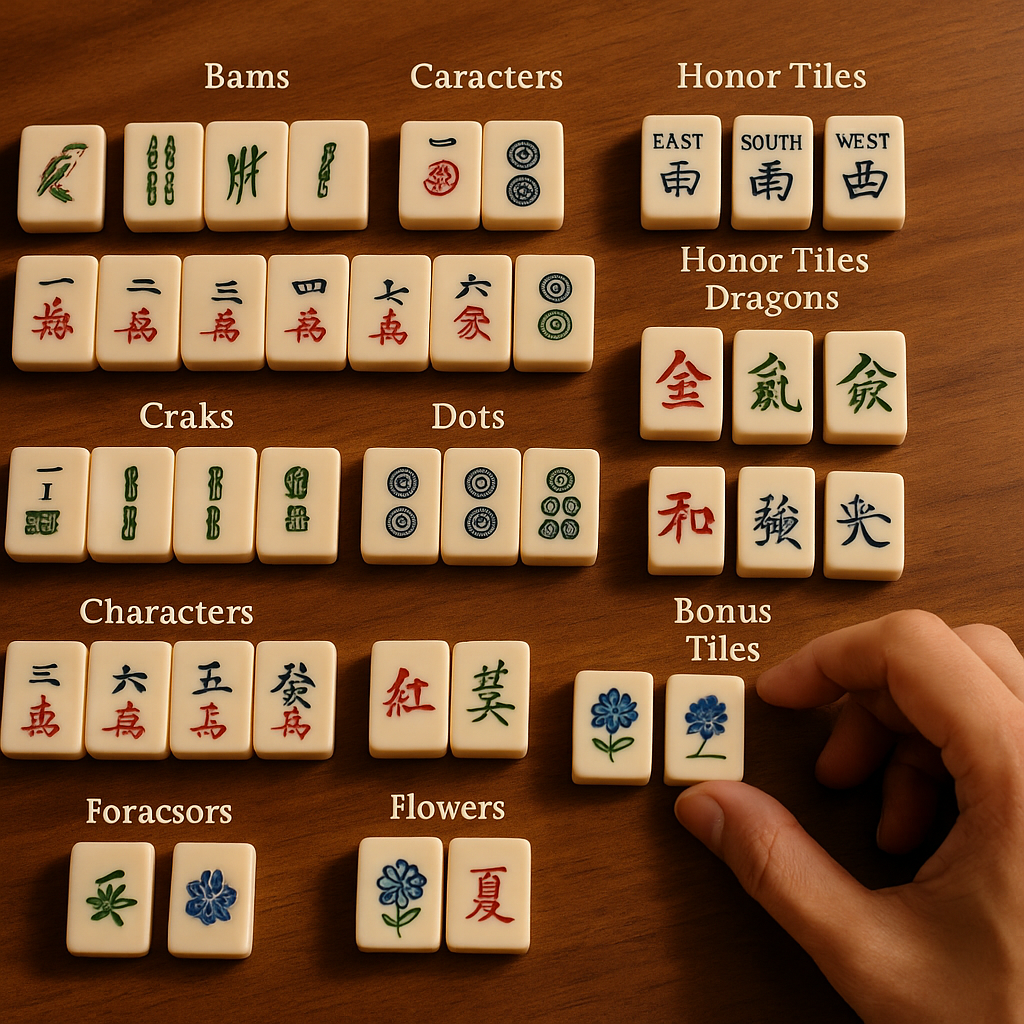
Just like cards in Hearts or Spades, Mahjong has suits. Each suit runs from one to nine.
Bamboo (Bams)
- Symbol: bamboo stalks
- Meaning: growth, flexibility, and resilience
- The “1 Bamboo” is often drawn as a bird instead of a stalk, adding unique character.
Characters (Craks)
- Symbol: Chinese numbers written in red
- Meaning: wealth and commerce
- They reflect Mahjong’s historical link to trade and prosperity.
Circles (Dots)
- Symbol: round coins
- Meaning: currency and unity
- The “1 Dot” is often a single large coin, while higher numbers show clusters.
👉 Try matching these in Turtle Mahjong to practice recognizing suits quickly.
Honor Tiles
The Winds
- East, South, West, North
- Rooted in traditional Chinese philosophy, the winds symbolize direction and cycles of life.
- In Mahjong Solitaire, they add elegance and variety, though they pair only with their identical twin.
The Dragons
- Red Dragon: passion, power, and victory
- Green Dragon: growth and vitality
- White Dragon: clarity, peace, and truth
These iconic tiles are the heart of the game. Matching two Red Dragons in Castle Mahjong always feels like unlocking energy.
Bonus Tiles: Flowers and Seasons
These are special because any Flower matches any Flower, and any Season matches any Season.
- Flowers: celebrate beauty, artistry, and renewal
- Seasons: mark the cycle of the year—spring, summer, autumn, winter
💡 Advanced tip: don’t waste them early. Save them in layouts like Pyramid Mahjong for moments when they can break through a blockage.
Mahjong Symbols as Cultural Storytelling
Mahjong tiles aren’t just game pieces—they’re a canvas of cultural history.
- Coins and characters tie back to commerce
- Winds to geography
- Dragons to myth
- Flowers to daily life
Understanding this symbolism makes every match feel more meaningful.
Ask yourself:
- Do you pause to appreciate the tile designs, or do you see them only as obstacles?
- Does knowing their meaning change how you feel when you match them?
Micro Drill: Tile Recognition Challenge
- Open a relaxing mahjong puzzle.
- Spend 2 minutes scanning for all Dragons before making a single move.
- Then, scan for all Winds.
- Start playing—notice how your recognition speed improves when you group tiles mentally by category.
This drill builds faster identification, which is crucial in timed modes like Timer Mahjong.
Why Knowing Tile Meanings Matters
- Faster Pattern Recognition: recognizing suits and symbols quickly boosts decision speed
- Deeper Enjoyment: every tile tells a story—knowing it makes the game richer
- Better Focus: grouping tiles by meaning trains your eye to see the Mahjong table more clearly
Want to test your growing knowledge? Check your progress on the Mahjong leaderboard—see how faster recognition translates into wins.
Final Thoughts
Mahjong is more than just a puzzle. Each tile is a piece of history, culture, and art. By learning their meanings, you’re not just improving your game—you’re connecting with a tradition that has fascinated players for centuries.
👉 Next time you start a free mahjong game, pause for just a moment to notice the symbols under your fingertips. Let the Dragons, Winds, and Seasons remind you: Mahjong is a story told one pair at a time.
Which tile resonates with you most—the bold Red Dragon, the calm White, or the eternal cycle of the Winds?