

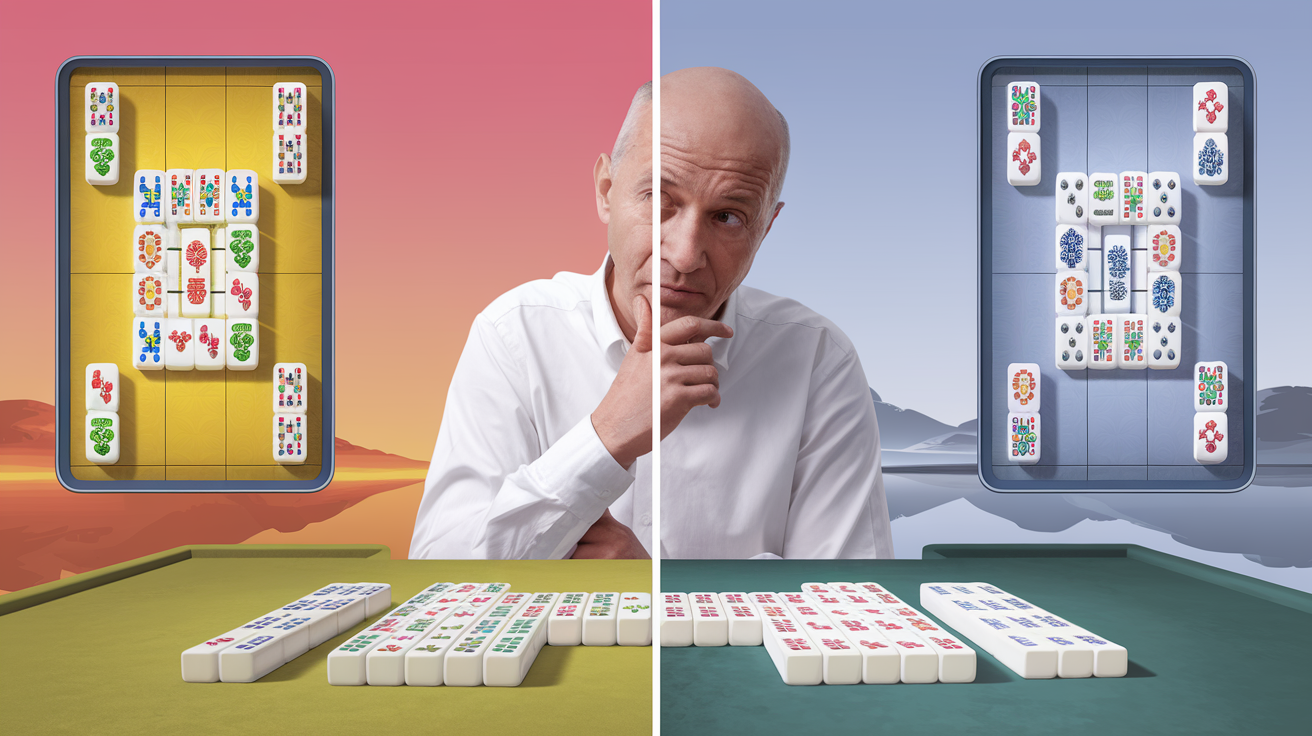
The Great Mahjong Solitaire Undo Debate: Learning Tool or Integrity Killer?
Walk into any mahjong solitaire forum or Discord server, and you'll eventually encounter a question that divides players more than difficulty settings or tile set preferences: Is the undo button a legitimate feature or a crutch that destroys the game's integrity?
This seemingly simple question opens a fascinating philosophical debate about game design, skill development, and what it actually means to "win" at mahjong solitaire. It's a conversation that exists in scattered forum posts and heated Reddit threads, but rarely receives the serious examination it deserves.
The Case for Unlimited Undo: The Learning Camp
Proponents of generous undo features make a compelling argument: mahjong solitaire is fundamentally about pattern recognition and strategic thinking, not memory or reflexes. Unlike real-time action games where mistakes are part of the challenge, solitaire games should reward good decision-making.
This camp argues that:
Undo enables genuine learning. When you make a move that leads to an unwinnable position ten moves later, an undo button allows you to understand why that move was wrong and try an alternative. Without it, you're simply starting over from scratch, learning nothing about the intermediate steps. This is particularly valuable for newer players trying to internalize the strategic principles of the game.
The game's difficulty comes from the puzzle, not memory. A challenging mahjong solitaire board is difficult because the winning path is narrow, not because you need to remember your moves. The real skill is identifying which pair removes to take advantage of board state and which exposed tiles will cascade beneficially. Undo doesn't make these decisions easier—it just allows you to test your strategic thinking without artificial punishment.
Real-world solitaire doesn't penalize mistakes permanently. When playing physical card solitaire, most people will restart a game if they realize they've made a strategic error. The undo button simply mirrors this natural human behavior, making digital versions more authentic to how the game is actually played.
Accessibility matters. Players with decision fatigue, attention disorders, or aging reflexes benefit tremendously from undo functionality. These players shouldn't be locked out of enjoying the game because they need a moment to reconsider a move.
The Case Against Unlimited Undo: The Integrity Camp
The opposing view is equally principled, if less forgiving. Purists argue that unrestricted undo fundamentally changes what game you're playing.
Their position rests on these arguments:
Constraints create the actual game. Without consequences for mistakes, decision-making becomes entirely consequence-free exploration rather than genuine strategy. You're not weighing the risk of a move against its potential benefit—you can simply revert if things go wrong. This transforms the game from a test of judgment into a puzzle where you can try every combination until one works.
Undo removes the tension that makes solitaire engaging. The reason winning at mahjong solitaire feels satisfying is precisely because not every deal is winnable and not every move is obvious. When you know you can undo, the stakes evaporate. You're no longer playing to win; you're playing to explore.
Different games require different undo philosophies. Purists point out that some classic solitaire variants (like many klondike implementations) have always allowed limited undo—typically three undos per game. This creates genuine consequences while allowing for minor corrections. Unlimited undo is something different entirely.
The counterargument to learning: memorization becomes the learning path. Without undo, players do learn—they learn which board configurations are typically winnable and which strategies generally work. This isn't shallow learning; it's pattern-building through experience.
Win rates become meaningless. If you can undo infinitely, the only games you won't eventually complete are those with no solution at all. A 100% win rate isn't an achievement; it's a mathematical inevitability. This eliminates one of the primary ways players measure their improvement.
How Different Platforms Handle Undo
The market hasn't reached consensus. Major platforms implement wildly different approaches:
themahjong.io offers unlimited undo with no restrictions. Players can back up as many moves as they want, treating the feature as part of the core experience. This is the most permissive approach and reflects a philosophy that learning and accessibility should take priority over constraint-based challenge.
Microsoft Solitaire Collection and similar official platforms typically offer limited undo (usually 3-5 undos per game) or no undo at all in premium difficulties, creating a middle ground.
Classic online solitaire sites often split the difference: unlimited undo for learning mode, limited or no undo for ranked play or achievement tracking.
Mobile apps vary dramatically, from hardcore no-undo implementations to completely permissive systems. The difference often correlates with the app's philosophy about whether they're making a game or a relaxation tool.
The Real Insight: Different Games for Different Players
After examining both sides, the most honest conclusion isn't that one camp is right and the other wrong. Rather, they're playing different games with the same tiles.
For players using undo to explore strategy and understand the game, it's a legitimate learning tool that mirrors actual solitaire practice. The game's difficulty still comes from the board state and the elegance of the solution, not from artificial move restriction.
For players who reject undo, the game that emerges is genuinely different: a test of judgment under pressure, where winning means executing a careful plan without error. This is equally valid and arguably more psychologically engaging.
The solution isn't religious adherence to one approach. It's transparency and choice. Platforms should:
- Clearly present undo as a choice. Some players want it; some don't. Let them decide.
- Separate achievement tracking. If undo is available, track wins with and without it separately so players can compare apples to apples.
- Recognize both as legitimate. Winning a challenging board without undo is impressive. Learning from your mistakes with unlimited undo is also valid and arguably more aligned with how solitaire is traditionally played.
Our Position
Themahjong.io's implementation of unlimited undo is defensible and reflects clear values: prioritizing learning, accessibility, and the true experience of casual solitaire over artificial constraint-based challenge.
Physical card solitaire doesn't penalize mistakes permanently—you simply reshuffle and try again. Digital solitaire adds no moral value by creating permanent consequences. The game's challenge should come from the puzzle itself, not from consequences for mistakes.
However, this doesn't invalidate the purist position. Players who want to experience solitaire as a test of clean execution have every right to challenge themselves by not using undo. The feature being available doesn't force you to use it.
The real debate isn't about whether undo undermines integrity. It's about what kind of game experience you're seeking. For learning, accessibility, and casual enjoyment, unlimited undo is a feature to celebrate. For players seeking a different kind of challenge, the self-imposed constraint of not using it creates exactly the game they want.
Both positions make sense. The best platforms acknowledge this and let players choose their own integrity.
