

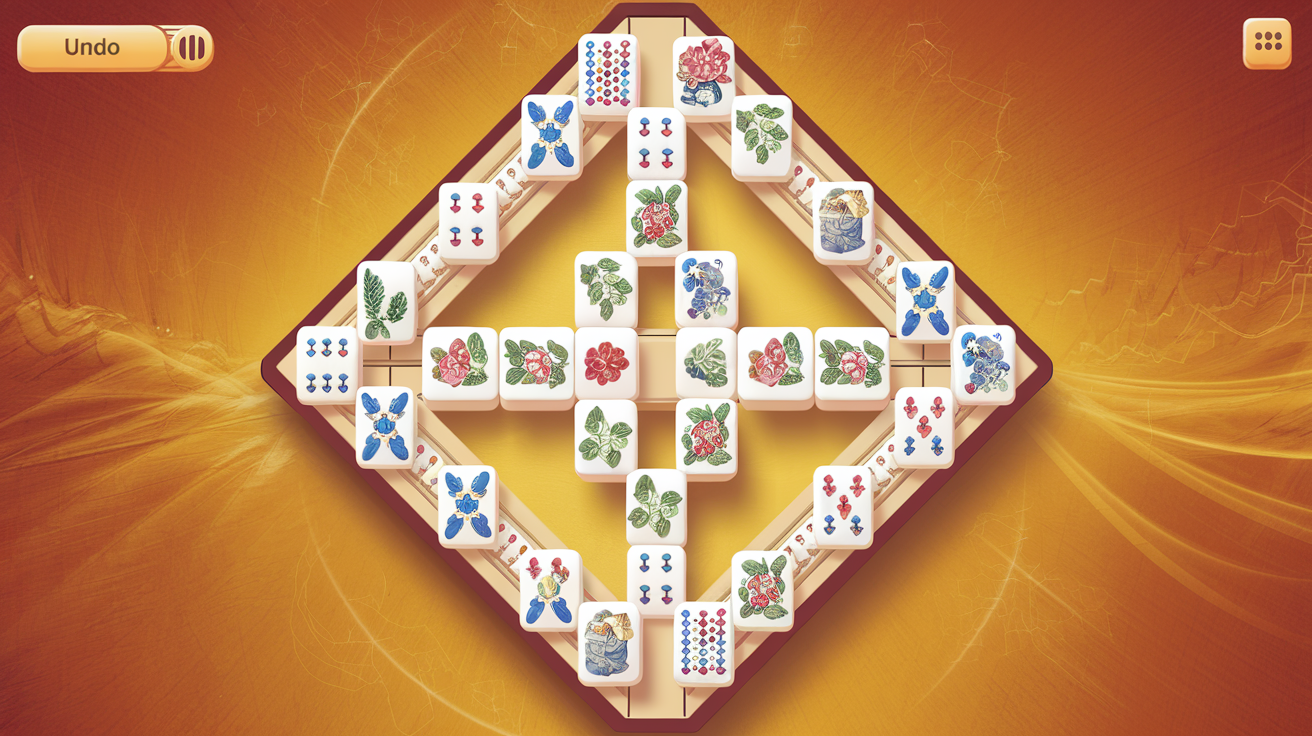
The Undo Debate in Mahjong Solitaire: Learning Tool or Game-Breaking Feature?
Walk into any mahjong solitaire forum, Discord server, or comment section, and you'll eventually encounter it: a passionate but civil disagreement about undo functionality. Some players swear by it as an essential feature for improvement. Others view it as a crutch that fundamentally corrupts the game's purpose. This isn't a trivial argument—it touches on what mahjong solitaire actually is and what we value in playing it.
Understanding the Stakes
Unlike some casual debates in gaming, the undo question in mahjong solitaire matters because it directly impacts game integrity, skill development, and personal satisfaction. A move made in mahjong solitaire can cascade through the remaining board state, closing off future possibilities or opening new ones. Once you remove a pair, that decision reverberates. The undo button asks: should that reverberation be permanent?
This isn't about graphics settings or difficulty sliders. It's about the fundamental relationship between player agency and game outcome.
The Pro-Undo Case: Learning Through Iteration
Proponents of unlimited undo present a compelling educational argument. Mahjong solitaire is, at its heart, a puzzle game. Like any puzzle, understanding why a particular solution fails—and experimenting with alternatives—is how you improve.
"Every game without undo is a mistake-and-lose scenario," argues the pro-undo camp. When you make a suboptimal move and immediately lose, you don't learn why it was wrong. You might not even recognize that it was wrong. You just know the game ended. With undo, you can reverse that move, observe the board state that resulted, and understand the causal chain leading to failure.
This mirrors how we learn in real life. A master chef doesn't throw away the meal after one mistake and refuse to think about it again. They taste it, understand what went wrong, and try again. Why should digital puzzle games be different?
Proponents also note that solving a mahjong solitaire puzzle is qualitatively similar to solving a crossword or Sudoku. Nobody argues that pencils with erasers ruin crosswords. The mistake-making and correction are part of the learning process.
Furthermore, unlimited undo democratizes the game. Not every player has the reflexes or working memory to map out five moves ahead in their head. Undo allows pattern-recognition and logical reasoning to shine without requiring superhuman planning. Players with different cognitive styles can still enjoy the puzzle.
The Purist Case: Consequences Create Meaning
But the opposing view deserves equal respect. Purists argue that removing consequences from decisions fundamentally changes what you're playing.
"If you can undo any move, you're not really playing mahjong solitaire anymore," the argument goes. "You're playing a different game—one where every decision is cost-free and where 'wrong' choices simply don't exist."
Consider the psychological difference: In a permanent-moves game, each selection carries weight. You pause. You consider. You commit. This moment of commitment—the knowledge that this choice will shape your remaining options—is integral to the puzzle's challenge. It transforms mahjong solitaire from a pure logic puzzle into something closer to chess: a blend of calculation and decision-making under uncertainty.
Purists also argue that undo obscures a crucial learning path: pattern recognition. When you must live with your choices, you develop an intuitive sense of safe and dangerous board states. You learn to read the board more carefully before moving. This defensive skill—knowing which moves to avoid before you make them—is arguably more valuable than the ability to correct mistakes after they happen.
Moreover, purists point out that difficulty and engagement are linked. When moves are permanent, the game is harder. Harder games create stronger satisfaction upon victory. The struggle is the point. A solitaire game where you almost never lose isn't a victory—it's just time-filling. It's like watching a movie where you can rewind every scene: technically you can see all the content, but you've eliminated the narrative tension that makes stories meaningful.
There's also a subtle philosophical argument: constraint breeds creativity. Composers famously produced their best work under formal constraints (sonata form, fugue structure). Removing the constraint of permanent moves might actually make mahjong solitaire less interesting, not more.
How Implementations Differ
Different platforms have staked different positions on this question:
themahjong.io offers unlimited undo, reflecting a player-friendly, learning-oriented approach. The platform treats the feature as integral to accessibility and improvement. You can experiment freely, make mistakes without penalty, and develop your strategic understanding through iteration. This positions mahjong as a puzzle to solve rather than a gauntlet to survive.
Mobile app implementations vary dramatically. Some offer limited undos (three or five), creating a middle ground: mistakes matter, but catastrophic errors can be partially mitigated. Others offer timed undo windows or require in-game currency to undo, converting the feature into a monetization mechanism.
Traditional digital implementations (like solitaire in Windows or classic PC versions) often eschew undo entirely, treating the game as a test of forward-planning ability rather than puzzle-solving.
Competitive platforms typically prohibit undo entirely, recognizing that competitive integrity requires permanent consequences. If you're competing against others or leaderboards, undo destroys any meaningful skill measurement.
These differences aren't arbitrary. They reflect different conceptions of what mahjong solitaire is: a learning puzzle, a casual time-killer, a competition, or a cognitive test.
Finding the Middle Ground
Both sides are making valid points about different aspects of game design. The real insight isn't that one side is right—it's that they're often talking about different games.
A strict purist playing on themahjong.io with unlimited undo can choose not to use it. The feature doesn't compel its use; it permits it. Similarly, a learning-oriented player can self-impose restrictions on a game that offers undo—setting personal rules about how many undos are allowed.
The conversation becomes more productive when we acknowledge that different players value different things. Some players want to test their decision-making under pressure. Others want to understand puzzle logic. Some want difficulty; others want accessibility. No single implementation is "correct" for everyone.
Our Position: Context Is Everything
After examining both arguments seriously, we believe the answer depends on what the player wants from the game.
For casual play and learning, unlimited undo (like themahjong.io offers) is not only legitimate but beneficial. Mahjong solitaire has enormous educational value—it trains pattern recognition, strategic planning, and causal reasoning. Undo enhances these benefits by allowing experimentation and deeper understanding. A player learning the game's strategic principles is playing the "right" game with undo enabled.
For skill development and competition, undo becomes problematic. If you're trying to measure your actual decision-making ability—if you want to know whether you truly can solve a board with imperfect information—then permanent moves are necessary. Skill requires stakes.
For casual relaxation, the question is personal preference. Some find undo stress-reducing (fewer consequences, more exploration). Others find the lack of undo stress-reducing (they commit to moves and don't second-guess).
The healthiest approach is transparency. Platforms should be clear about their undo policy and why they've chosen it. Players should understand what they're getting and choose accordingly. Mahjong solitaire is large enough for multiple valid implementations.
themahjong.io's position—unlimited undo for learning and exploration—is not a compromise on integrity. It's a deliberate choice about what kind of game it wants to be: an accessible, learning-friendly puzzle environment. That's a perfectly legitimate vision.
But equally, a purist version with no undo would be a perfectly legitimate vision too. The debate matters because it clarifies values. And in a game as rich as mahjong solitaire, there's room for both.
