

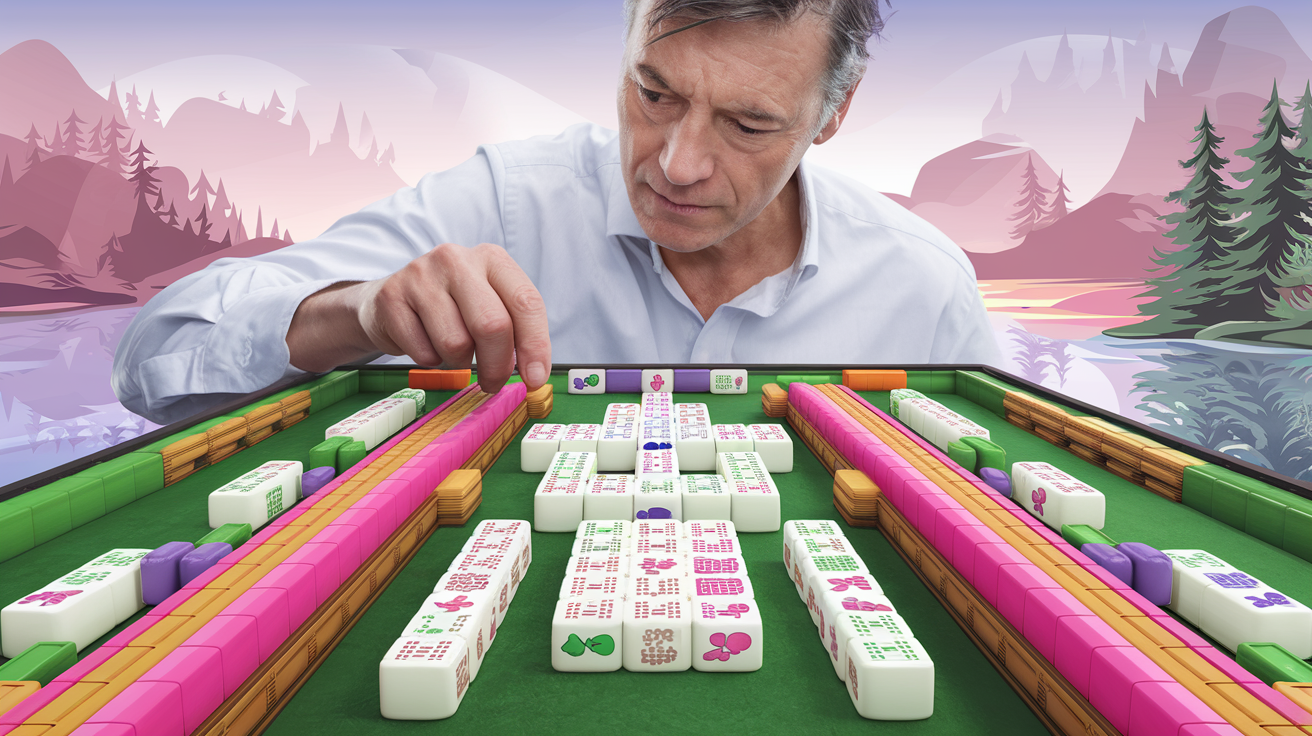
The Paradox of Hints in Online Mahjong Solitaire: Building Skill Without Becoming Dependent
When I first discovered online mahjong solitaire, I was captivated. The tiles, the matching mechanics, the satisfaction of clearing the board—it all felt like meditation meets strategy. Within the first week, I'd exhausted the hint system so thoroughly that I wasn't actually playing anymore. I was watching myself win.
This realization came too late. By the time I tried playing without hints, I'd developed what I call "hint muscle memory." I couldn't perceive the board independently. I'd trained my brain to wait for external validation rather than trust my own analysis. It took months to unwind that dependency and rebuild genuine strategic thinking.
That experience taught me something crucial: hints are neither villains nor saviors. They're tools whose value depends entirely on how and when you deploy them.
When Hints Actually Accelerate Learning
Let's be clear: hints have legitimate pedagogical value. In the early stages of learning mahjong solitaire, hints can clarify game mechanics that would otherwise remain abstract.
Consider this scenario: You're new to the game and don't yet understand how tile accessibility works—which tiles can be matched based on their position and adjacent pieces. A well-placed hint doesn't just show you what to match; it demonstrates why that particular match was possible. This is pure learning.
Hints also serve a critical function when you've genuinely hit a wall. Some mahjong boards contain genuine dead-end configurations where a wrong choice earlier cascades into an unwinnable position. A hint here isn't enabling laziness; it's preventing frustration-driven abandonment of an otherwise learnable layout.
The key distinction: Hints help when they teach, not when they avoid.
If you use a hint to learn why a move works, you've moved forward. If you use a hint because you didn't want to think, you've moved backward—even if you advanced in the game.
The Hidden Cost of Over-Relying on Hints
Here's what happens when hints become reflexive rather than intentional: Your pattern recognition atrophies.
Mahjong solitaire, fundamentally, is about visual scanning and spatial reasoning. When you can match tiles, you must identify which tiles are accessible (unblocked on at least one side) and which potential matches exist on the board. This scanning is a learned skill. The more you do it, the faster and more intuitive it becomes.
But when you habitually reach for hints, you're outsourcing that cognitive work. Each hint-dependent move is a move your visual system didn't have to solve. Multiply that across hundreds of games, and you've essentially built a neural pathway that leads from "board is confusing" to "request external solution" rather than "analyze board myself."
I noticed this in my own play: early hints made me faster at winning but slower at understanding. I could clear boards without knowing why certain matches mattered. This became catastrophic when I attempted harder difficulty levels—the complexity that once seemed manageable felt overwhelming because I'd never developed the foundational pattern recognition.
There's also a psychological component. Hints create a false confidence gradient. You win more games with hints, which feels like progress. But that progress is synthetic. You're not actually becoming better at mahjong; you're becoming better at getting hints.
The Tiered "Hint Budget" Framework
So how do you use hints intentionally? The answer is a structured approach: the hint budget.
Instead of unlimited hints, allocate a specific number per session. The budget forces intentionality. Every hint now costs something—specifically, opportunity cost. You must ask: "Is this the right time to spend a hint?"
Here's how to structure it:
Tier 1: The Restrictive Budget (Beginners) Allocate 2-3 hints per game. This constraint forces you to engage with the board deeply before requesting help. You'll make mistakes—intentionally—and learn from them. When you do use a hint, you're acknowledging genuine uncertainty, and that moment of clarity hits differently.
Tier 2: The Strategic Budget (Intermediate) Allocate 1 hint per game, or 3-4 per session. At this level, you're not using hints to solve the board; you're using them to break deadlocks when genuinely stuck. You're developing the ability to see most moves independently and asking for help only when your pattern recognition genuinely fails.
Tier 3: The Emergency Budget (Advanced) Allocate hints only for moments when you suspect the board might be unwinnable, or for periodic strategy validation. You're essentially self-reliant but maintain the safety net.
The progression from Tier 1 to Tier 3 isn't about reaching higher difficulty levels—it's about building confidence in your own visual and strategic processing. As your hint budget decreases, your actual skill increases.
How to Implement This in Practice
If you're using a platform like themahjong.io, which features a well-implemented hint system, you're in an ideal position to practice deliberate hint usage. The platform's hint feature is designed to be helpful without being intrusive—it shows you a valid move without forcing you down a predetermined path.
Here's the intentional practice loop:
- Set your budget before starting a session. Be honest about your level.
- Pause before using a hint. Ask yourself: "Do I genuinely need this, or am I just avoiding the effort of analysis?"
- Analyze the hint. When you use one, study why that move was recommended. What pattern did you miss?
- Track your performance without hints. Notice how your independent move-finding improves over weeks.
- Gradually reduce your budget. As your confidence grows, lower the number per session.
The Deeper Principle: Productive Struggle
Ultimately, this is about embracing productive struggle. Mahjong solitaire isn't fun because it's easy—it's fun because it offers resistance that rewards focused attention.
When you eliminate that resistance through unlimited hints, you don't make the game easier; you make it shallower. The satisfaction of winning comes not from the win itself but from the competence you demonstrated to achieve it. Hints can rob you of that genuine accomplishment.
The goal isn't to never use hints. The goal is to use them strategically enough that every win reflects actual learning, not just accurate hint-following. That's when you've truly moved from playing mahjong to developing mastery.
Start this week: Set your hint budget, and notice how it changes your relationship with the game.
