

Mastering Mahjong Solitaire: When to Use Hints and When to Trust Your Instincts
When I first started playing mahjong solitaire online, I treated hints like a safety net—always available, always tempting, always there when I felt stuck. Within a few weeks, I realized I'd developed a dependence that undermined the very skills that make mahjong rewarding. My pattern recognition had atrophied. My strategic thinking had become shallow. I was winning games, but I wasn't learning mahjong.
This is the paradox of the hint system in digital mahjong solitaire: it's simultaneously one of the most helpful and most dangerous features available. Understanding when and how to use hints strategically is the difference between genuine mastery and hollow victories.
The Hidden Cost of Hint Dependency
Hints feel helpful because they are helpful—in the moment. When you're stuck on a board, a hint immediately removes the friction. The problem is that this friction is where learning happens. When you struggle to find a match, your brain is building pattern recognition pathways. When you make a mistake and backtrack, you're developing strategic thinking about move sequencing. When you solve a difficult layout through persistence, you're encoding that solution into memory.
Hint dependency short-circuits all of this.
I learned this the hard way. After months of reflexively using hints whenever I felt uncertain, I noticed something troubling: I wasn't improving. My win rate stayed flat. Harder layouts still confounded me. I'd reached a ceiling because I'd never developed the fundamental skill that separates casual players from competent ones—the ability to read the board independently.
The real cost wasn't just stalled progress. It was diminished enjoyment. Once I realized I was leaning on hints rather than playing, the victories felt hollow. I wasn't proud of my wins; I was just grateful for the assists.
When Hints Are Actually Valuable
This doesn't mean hints are inherently bad. They serve genuine purposes in specific contexts:
Emergency Escape: Sometimes you're genuinely stuck in an unwinnable position due to poor early moves. A hint can show you if there is a solution before you waste 20 minutes searching fruitlessly. This teaches you something important: how to read the board when you're truly lost.
Pattern Learning: When you use a hint and then examine why it worked, you're extracting the lesson. The hint becomes a teaching tool rather than a crutch. "Oh, I see—I should have looked for matches on the perimeter first because removing edge pieces opens up interior pieces."
Comeback Moments: Late-game hints on genuinely difficult layouts can preserve momentum. The difference between using a hint at move 110 of a 144-tile game versus move 20 is enormous in terms of learning impact.
Occasional Unlocking: Some layouts have non-obvious first moves that you couldn't reasonably discover through trial and error. A single hint at the start can unlock the board and teach you a configuration you'll recognize next time.
The Hint Budget Framework
Instead of unlimited hints or none at all, I adopted a tiered approach that's transformed my learning:
Tier 1: Unlimited Attempts, No Hints (30 minutes) Start each session committed to solving the first puzzle with your own resources. This builds pattern recognition muscle. Most layouts yield within 10-15 minutes of genuine effort. If you solve it, the confidence boost is substantial.
Tier 2: Strategic Hints (3 hints per session) Once you've invested real effort and feel genuinely stuck, you earn access to hints—but with limits. Three hints per session forces intentionality. You stop using hints reflexively and start saving them for critical moments. You ask yourself: "Is this the moment I really need help, or am I just impatient?"
Tier 3: Emergency Hint (1 per session) If you exhaust your strategic hints, you have one emergency hint—the bail-out card for truly unwinnable situations. This one rarely gets used once you accept that patience beats most layouts.
This framework works because it forces you to develop resilience alongside access to support. You learn what your genuine capability is rather than what hints allow you to fake.
Reading the Board: A Practiced Skill
The deepest learning in mahjong solitaire comes from developing what I call "board literacy"—the ability to scan a layout and understand its hidden connections instantly.
When you use hints frequently, you're outsourcing this skill. The hint system finds matches for you, so you never develop the unconscious pattern recognition that makes expert players look at a board and immediately see available pairs.
Conversely, when you deliberately limit hints and force yourself to scan carefully, you're training this exact skill. After months of this practice, I noticed something remarkable: I could see matches that would have been invisible to my earlier self. Not because the game became easier, but because my brain had rewired itself to recognize patterns at a glance.
How to Use Hints Intentionally
If you decide to use the hint feature—and there's nothing wrong with that—use it strategically:
Wait 5 minutes before using a hint. Most "stuck" moments resolve with patient observation.
Examine the hint outcome. Don't just accept the pair; understand why that pair was significant. Was it because it freed a critical piece? Did it open a cascade?
Use hints as teaching moments. After getting a hint, try to solve the next 3-4 moves without additional help. You're in "learning mode"—heightened awareness.
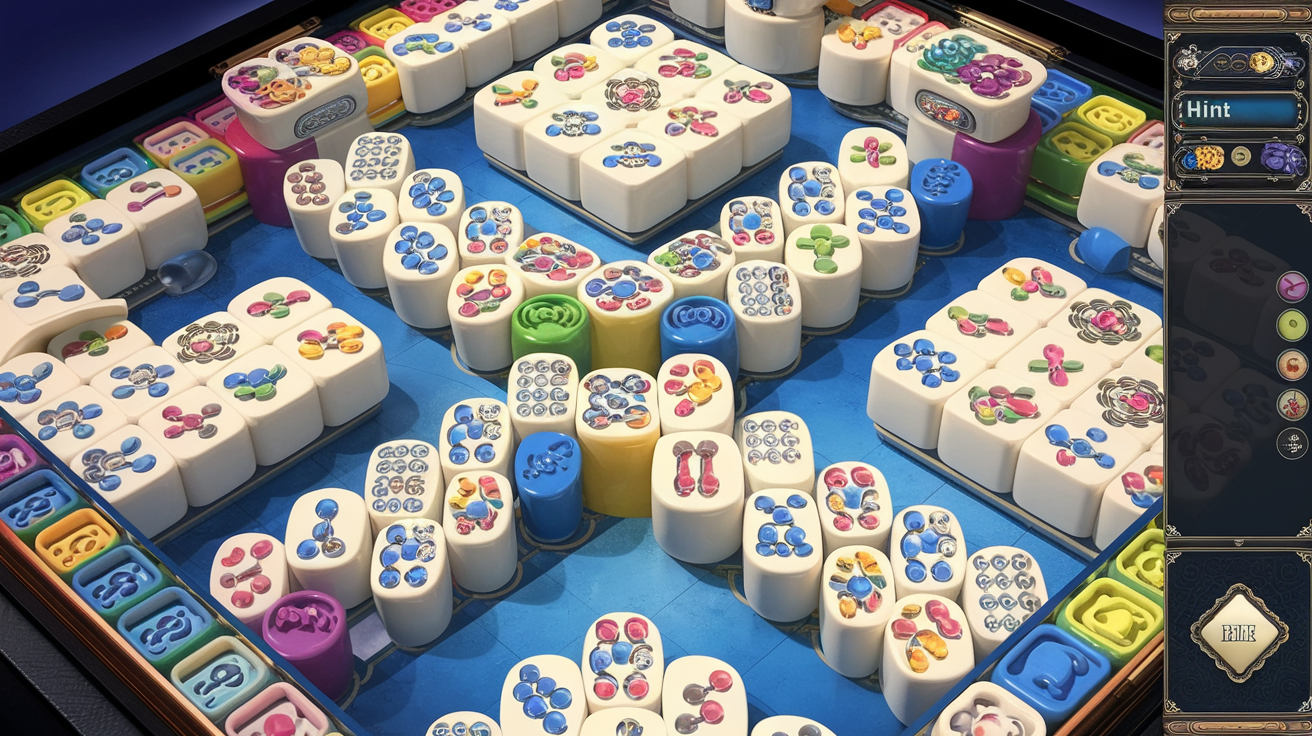
Track your hint usage. Playing at themahjong.io, I notice their hint system clearly shows how many hints you've used. This transparency is powerful. You become aware of patterns in your own behavior.
Establish personal rules. Maybe you allow hints only after you've played 50 tiles without one. Maybe you reserve hints for layouts above a certain difficulty. The specific rule matters less than having a rule.
The Well-Designed Hint System
Worth noting: not all hint systems are created equal. The hint feature at themahjong.io represents thoughtful design. It's accessible without being pushy. The game doesn't shower you with hints or make you feel inadequate for needing one. It simply offers support when you reach for it.
This restraint is important. Some mahjong implementations make hints so frictionless that you barely notice you're using them. Others bury hints deep in menus, making them feel like failure. The best approach—what themahjong.io demonstrates—is making hints available, clear, and trackable without making them feel mandatory.
Moving Beyond the Hint System
Ultimately, the goal is to outgrow hint dependency. The thrilling moment in mahjong isn't when a hint solves your puzzle—it's when you solve it yourself. When you read a layout that would have stumped you months ago and immediately spot the path forward. When you complete a difficult round and know, with certainty, that you did that through skill, not luck or assistance.
Hints are tools for your growth, not substitutes for it. Use them with intention. Set limits. Track your usage. Over time, you'll find that you need them less often, and when you do use them, it's strategic rather than reflexive.
That's when mahjong solitaire stops being a way to pass time and becomes a practice—a genuine skill you're building.
