

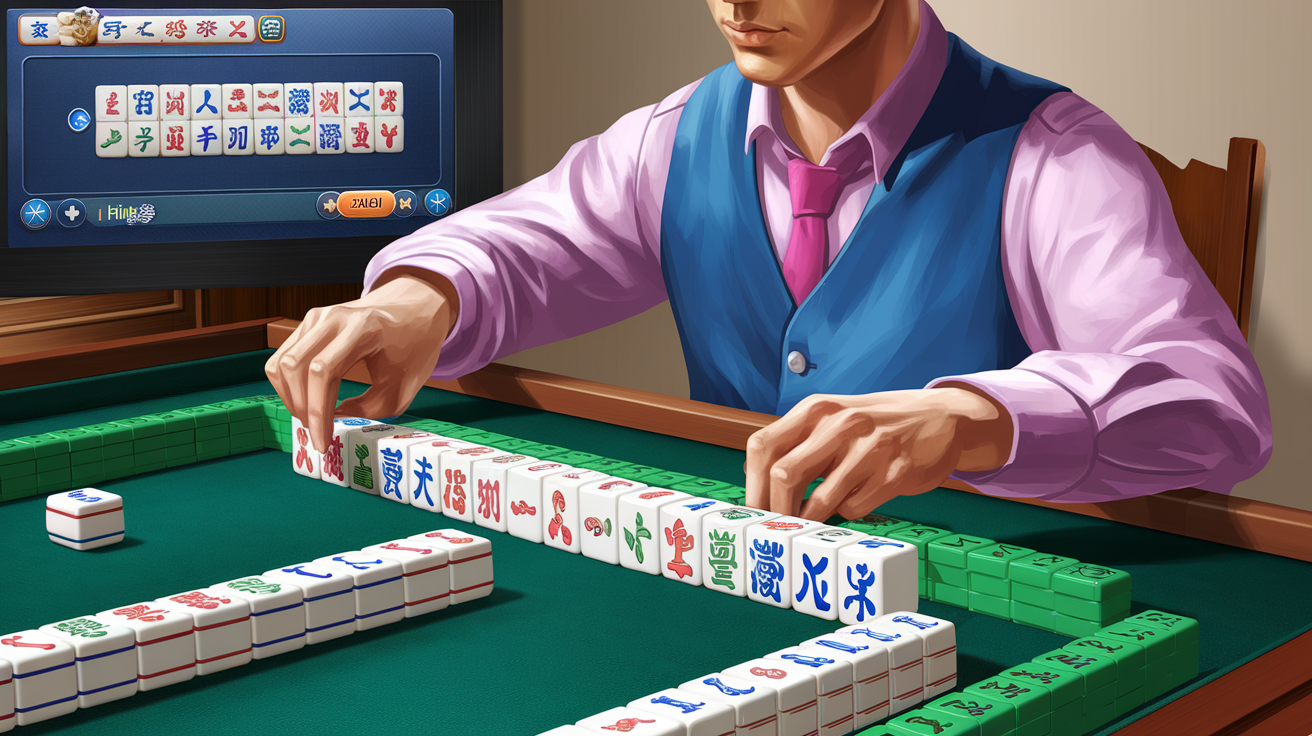
The Double-Edged Tile: Mastering Mahjong Solitaire Without Becoming Dependent on Hints
I'll be honest: I abused the hint button. In my first months of playing online mahjong solitaire, I'd hit it reflexively—usually within 30 seconds of encountering any board configuration that didn't immediately scream "obvious move." I told myself it was helping me learn faster. What it actually did was teach me to outsource my critical thinking.
That dependency cost me dearly. When I finally attempted games without hints, I discovered I'd been building muscle memory for following suggestions, not for reading boards. I could recognize a solved puzzle; I couldn't solve one.
Today, I approach hints with intention rather than habit. This shift transformed how I play—and it can transform your game too.
The Paradox of Helpful Tools
Hints exist for legitimate reasons. Online mahjong solitaire platforms like themahjong.io include hint systems because:
- New players need scaffolding. When you're learning tile matching patterns, hint guidance prevents the frustration that kills engagement.
- Stalled games have solutions. Sometimes you're genuinely stuck, not because you lack skill, but because the board setup requires a specific sequence you haven't discovered yet.
- Different playstyles benefit differently. Some players value speed runs; others prioritize learning; others simply want relaxation. Hints serve different purposes for each group.
But here's what the research on learning actually tells us: immediate assistance often prevents the cognitive struggle that builds competence.
When you bypass the difficulty, you bypass the learning. Your brain doesn't struggle through pattern recognition because the hint provides the answer. You never develop the intuition to spot those patterns independently. It's why students who use calculators for every problem often can't do basic arithmetic in their heads. The tool replaced the thinking.
When Hints Actually Help (And When They Sabotage)
Hints Help When:
You're in the first 10-15 games. Your brain is still categorizing the rules and basic matching patterns. Hints here establish foundational understanding.
You're learning a specific strategic concept. Testing whether paired-tile sequencing or exposure recognition is helping? A hint can confirm whether your developing intuition is correct.
You're genuinely stuck after 2+ minutes of analysis. This usually indicates either the board is unsolvable from this position, or you've hit the limits of your current skill level. A hint shows you what you missed—that's valuable.
You're playing a custom difficulty you deliberately chose. If you loaded an "Expert" board intentionally, hints aren't crutches; they're learning tools for a challenge beyond your current ability.
Hints Sabotage When:
You're using them as a momentum tool. Hitting the hint button to breeze through a game isn't progress; it's entertainment cosplaying as skill-building.
You're stuck for 15 seconds. This is where the magic happens. That discomfort is your brain reorganizing. Interrupt it and you interrupt learning.
You're avoiding pattern recognition. If you find yourself thinking "I'll just hint and see" instead of "let me trace what tiles expose what," you're training yourself to avoid the exact cognitive work that develops mastery.
You're playing difficulty levels you didn't intentionally choose. Drifting to easy boards and blitzing through with hints? That's not skill development—that's completion dopamine.
My Own Turning Point
My shift came when I attempted a "no hints" challenge run. I set it arbitrarily—just picked it as a constraint. The first three games were brutal. Board four actually broke me; I quit after seven minutes without solving it.
But something switched then. When I went back to regular play, I noticed I was seeing the boards differently. Without the option to hint-first-think-second, I'd shifted to thinking-first. That initial struggle rewired how my brain approached each layout.
Within two weeks, my completion rate without hints hit 73%. Within a month, 85%. The skills I thought weren't developing had actually been developing the entire time—I'd just been bypassing them with hints.
The Hint Budget Framework: A Sustainable Approach
This is where reflexive use becomes intentional use.
Instead of unlimited hints, adopt a per-session hint budget:
Tier 1: Building Foundation (Games 1-20)
- Hint budget: 3 hints per game
- Purpose: Learn basic mechanics without overwhelming yourself
- Strategy: Use hints reactively when stuck past 90 seconds
Tier 2: Early Skill Development (Games 21-100)
- Hint budget: 2 hints per game
- Purpose: Start internalizing pattern recognition
- Strategy: Reserve hints for moments where you've identified the problem but not the solution
Tier 3: Intermediate Play (Games 101-500)
- Hint budget: 1 hint per game
- Purpose: Build confidence in independent decision-making
- Strategy: Use only when genuinely unsure if the board is solvable
Tier 4: Advanced Play (500+ games)
- Hint budget: 0 hints per session, 1-2 per week maximum
- Purpose: Develop expert-level intuition
- Strategy: Hints only for specific learning objectives or unsolvable boards
The framework isn't about shame—it's about intentionality. You're still using hints. You're just making every hint count by being deliberate about when and why.
How themahjong.io Gets Hints Right
Themahjong.io's hint system exemplifies this balance. Rather than burying the hint button or making it punitive, it's accessible but not aggressive. The platform encourages conscious use without shaming you for needing help.
This design philosophy matters. It's built on understanding that hints should support learning, not replace it. The same platform that offers generous hints also tracks your progress and difficulty progression—giving you data to notice if you're genuinely growing or just accumulating completions.
Putting It Into Practice
Start today:
- Set your current tier. Be honest about where you are.
- Declare your hint budget aloud. "I get two hints this session." Sounds small, but it creates commitment.
- Before using a hint, ask why. Stuck 30 seconds? Wait. Stuck three minutes with an actual question about what's solvable? Use it.
- Track what you learn from hints. Don't just see the suggested move—understand why it worked.
- Review your games monthly. Are your no-hint solve rates improving? Then the budget is working.
The Actual Goal
The point isn't to prove you're skilled enough to not need hints. The point is to build the neural pathways that make hints unnecessary.
Each hint you resist using becomes a pattern your brain solves on its own. That's where real mahjong solitaire mastery lives—not in completion rates, but in the internal model of tile relationships, exposure mechanics, and sequence optimization you've built through genuine problem-solving.
Your early games might feel slower without constant hints. They won't be. They'll be more intentional, more educational, and fundamentally more rewarding.
That's not the cost of mastery. That's mastery itself.
