

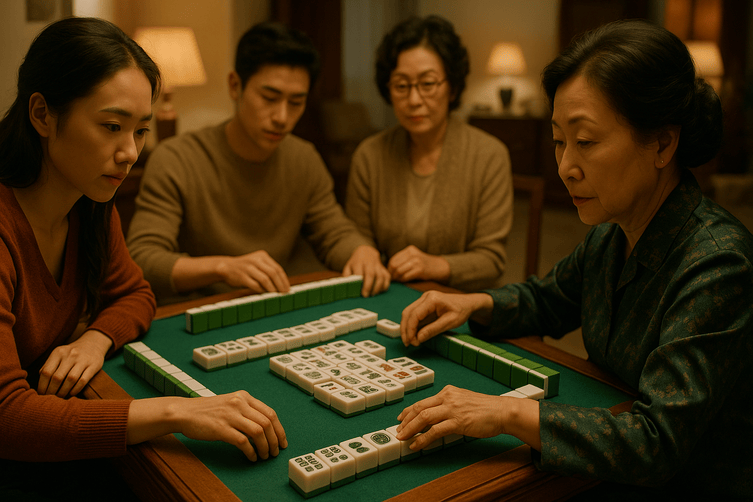
Mahjong in Movies and Pop Culture: How a Timeless Game Became a Cinematic Symbol
When the camera pans across a table of gleaming tiles, the sound alone tells you everything — that rhythmic click, the faint shuffle, the tension before a player calls “Mahjong!” Few games have the cinematic allure of Mahjong. Whether in Hollywood blockbusters or quiet art films, it’s often used to symbolize strategy, culture, and emotional intelligence. Have you ever noticed how often Mahjong appears in the movies you love — and what it really stands for?
The Game That Speaks Without Words
Mahjong is visual poetry: complex yet calming, ancient yet adaptable. It’s no wonder filmmakers use it to express power dynamics, generational conflict, and emotional depth.
You can feel this same tension and beauty when you play a free mahjong game — every move becomes part of a silent story, much like a movie scene unfolding one tile at a time.
Crazy Rich Asians – Mahjong as Emotional Chess
Perhaps the most famous modern example is the film Crazy Rich Asians (2018). In its unforgettable final act, Michelle Yeoh and Constance Wu face off in a symbolic Mahjong match.
On the surface, it’s just two women playing tiles. But underneath, it’s a silent negotiation — about love, tradition, and self-worth. The final reveal of the winning hand became one of the most discussed film scenes of the decade.
If that scene inspired you, try channeling your focus in Timer Mahjong — where every decision counts under pressure, just like in the film.
The Joy Luck Club – Mahjong and Family Legacy
Long before Crazy Rich Asians, The Joy Luck Club (1993) introduced Mahjong to Western audiences through its depiction of Chinese-American families. The opening sequence — four women forming a weekly Mahjong circle — beautifully captured how the game connects generations.
The film reminded viewers that Mahjong isn’t only about winning; it’s about listening, remembering, and belonging. If you’d like to experience the same sense of calm community, open a mahjong puzzle and imagine playing with friends across generations.
In the Mood for Love – Subtle Symbolism
In Wong Kar-wai’s In the Mood for Love (2000), Mahjong becomes part of the unspoken rhythm between two lonely neighbors. They play with their spouses — absent yet ever-present — as emotional distance grows.
This use of Mahjong shows how silence and ritual can speak volumes. When you play a mahjong 3D online layout, the layers of tiles feel almost cinematic — what’s hidden, what’s revealed, and what remains just out of reach.
From Old Shanghai to Modern Streaming
Mahjong has appeared everywhere: in Crazy Rich Asians, The Farewell, Kung Fu Hustle, Memoirs of a Geisha, and even TV shows like The Simpsons and Friends.
In China’s golden age of cinema, Mahjong scenes represented community and culture; in Western movies, they often symbolize identity and inner balance. The fact that it fits seamlessly into both worlds speaks to its timelessness.
And just as film evolved, Mahjong did too — from smoke-filled parlors to online platforms. Today, millions of players play mahjong, keeping the tradition alive in a modern setting.
Why Filmmakers Love Mahjong
- Visual Drama: The tiles themselves — engraved, colorful, and tactile — look beautiful on screen.
- Emotional Symbolism: Every hand tells a story: patience, risk, victory, or loss.
- Cultural Authenticity: For East Asian storytelling, Mahjong grounds a scene in heritage and realism.
Much like in a Turtle Mahjong layout, the game’s structure mirrors human emotion — layer upon layer, with meaning revealed as the story unfolds.
Final Thoughts
Mahjong’s place in film and pop culture proves it’s more than a game — it’s a storytelling language. From family dramas to romantic symbolism, its quiet power transcends generations and screens.
👉 Next time you play a mahjong game, take a moment to notice the rhythm of your own story unfolding tile by tile. You might just find that same cinematic feeling filmmakers chase — focus, tension, and beauty in motion.
If your life were a movie, would Mahjong be your calm scene… or your dramatic showdown?
