

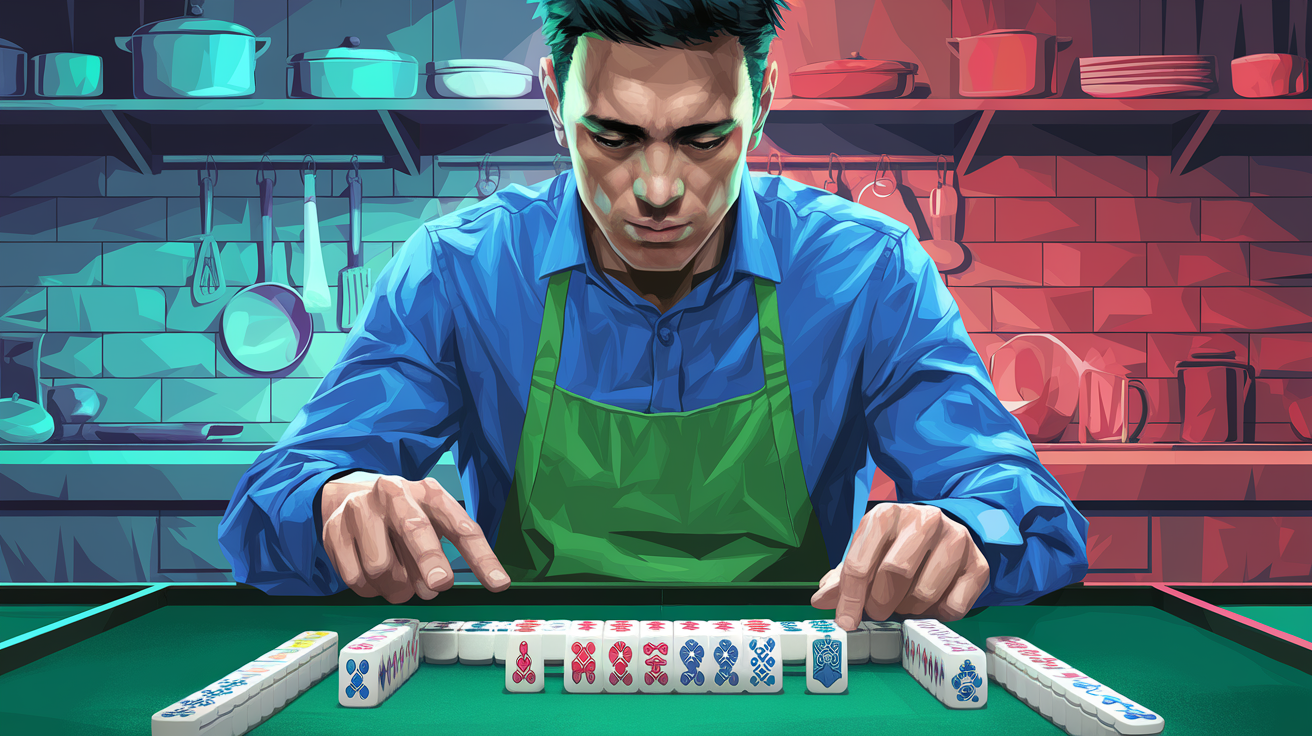
Mastering Mahjong Solitaire: The Strategic Use of Hints vs. Building Real Skill
When I first started playing mahjong solitaire seriously, I treated hints like a lifeline. Stuck on a level? Hint. Can't spot a match? Hint. The feature felt like a generous safety net, and I exploited it without thinking about the cost. What I didn't realize was that every hint I grabbed reflexively was a decision my brain didn't have to make—and therefore a pattern it didn't learn to recognize.
Months into regular play, I hit a frustrating wall. I could cruise through moderate difficulty levels with hints enabled, but when I attempted to play without them, I felt genuinely helpless. My win rate plummeted. Worse, I wasn't improving; I was just developing a dependency. That's when I understood that hints, like any tool, can either accelerate genuine learning or create an illusion of it.
Today, I approach hints strategically. And I want to share what I've learned about using this feature intentionally rather than reflexively—because the difference between casual play and skill development in mahjong solitaire hinges on this exact distinction.
When Hints Actually Help Your Learning
Let's be clear: hints serve legitimate purposes in mahjong solitaire. The question isn't whether they're helpful, but when they're helpful and how to use them.
Hints work best in these scenarios:
1. Pattern Recognition for Beginners When you're new to mahjong, the tile visuals alone can be overwhelming. Hints pointing out valid matches help you train your eye to recognize which tiles connect geometrically and thematically. This foundational pattern recognition is genuinely hard to develop in a vacuum.
2. Breaking Mental Deadlock Sometimes you're not stuck because you lack skill—you're stuck because you're tunnel-visioned on one section of the board. A hint can interrupt that cognitive fixation and help you see the board freshly. This is particularly valuable when learning how to read complex board layouts.
3. Understanding Strategic Consequences When you're learning advanced strategy, a hint can sometimes show you a move you hadn't considered, which teaches you about sequencing and forward planning. Seeing why that move matters becomes a learning moment.
4. Recovering from Bad Play If you've made several strategic mistakes and reached an unwinnable position, a hint (or restarting) helps you recover without hours of frustration. The goal is learning, not punishment.
The Dark Side: How Hints Prevent Skill Development
But here's what I experienced firsthand: excessive hints create what I call "decision avoidance." Your brain stops actively problem-solving. Instead, it enters a passive state, waiting for the hint system to prompt the next move.
This costs you three critical skills:
1. Pattern Recognition Becomes Shallow When hints solve problems for you, you never develop deep visual literacy on the board. You can't quickly scan a complex layout and spot multiple valid moves. Advanced players don't use hints because they've trained their eyes to see patterns instantly. If you're always waiting for a hint, you're training your eyes to wait—which is the opposite direction.
2. Strategic Planning Atrophies Mahjong solitaire, especially at higher difficulties, requires thinking 3-5 moves ahead. Which tiles block which other tiles? What sequence unblocks the board? Hints answer these questions for you, so you never develop the planning muscle. I remember realizing I could complete levels with hints but had no idea why those moves worked. I was memorizing solutions, not learning strategy.
3. Confidence Never Builds This might be the most underrated cost. When you complete a level because you followed hints, the win doesn't feel earned. Deep down, you know the hint system won the game. This creates a strange psychological loop: you need the hints to win, which means you never build confidence to play without them, which means you depend on hints more. It's a downward spiral disguised as assistance.
The Hint Budget Framework: Intentional Learning
After hitting that wall, I developed what I call the "Hint Budget" system. Instead of hints-on-demand, I allocate a specific number per session based on the difficulty and my goal.
Here's how it works:
Beginner Difficulty: 5-8 hints per session At this level, you're still learning tile visuals and basic matching. Use hints liberally, but with purpose. After using a hint, pause and try to understand why that was a valid match.
Intermediate Difficulty: 2-4 hints per session Now you're building strategy. Set a lower budget. Before using a hint, force yourself to spend 60 seconds genuinely trying. This friction is where learning happens. Use hints only when genuinely stuck, not when slightly challenged.
Advanced Difficulty: 0-2 hints per session At this level, hints should feel rare and precious. Many advanced players play with zero hints. If you use one, it should be because you've genuinely exhausted your options or hit a deadlock, not because you want to optimize your win rate.
Progressive Challenge: 1 hint per session This is the ultimate learning mode. One hint per session forces you to maximize your problem-solving within constraints. You'll be amazed at how creative your brain becomes.
The key insight: hints work best when they're scarce. Abundance teaches dependency; scarcity teaches skill.
How themahjong.io Gets Hints Right
One of the reasons I keep returning to themahjong.io is that their hint system respects this philosophy. They provide hints—which is crucial for new players—but the implementation encourages intentional use rather than reflexive mashing.
The hints on themahjong.io display a valid match rather than infinitely scrolling through options. This means each hint actually teaches you something: "Here's a tile pairing I didn't see." It's not a crutch; it's a teacher. And the interface makes you deliberately choose to use a hint, rather than auto-suggesting them when you hesitate.
This is what good hint design looks like: accessible enough for learning, but structured in a way that encourages players to develop their own problem-solving before reaching for help.
Building Your Intentional Practice Routine
Here's what my current practice looks like, and what I'd recommend:
Session 1: Skill Building (60 minutes)
- Play 3-4 levels at intermediate difficulty with your hint budget
- Focus on understanding each move, not just winning
- When you win, take 30 seconds to mentally replay the strategy
Session 2: Confidence Building (45 minutes)
- Play 2-3 levels at advanced difficulty with minimal hints (0-2)
- Accept that some games you'll lose. That's feedback, not failure
- The goal is learning decision-making under constraints
Session 3: Flow State (30 minutes)
- Play whatever difficulty feels fun and sustainable
- Hints optional; use them only if genuinely enjoying the break in flow
Over time, you'll notice something shift. The board becomes readable. Strategies that seemed mysterious become intuitive. And hints, when you use them, teach rather than rescue.
The Long Game
I spent my first month thinking hints were gifts. I spent my second month realizing they were obstacles to actual improvement. Now, months later, I understand they're tools—and like any tool, their value depends entirely on how you use them.
The players who develop genuine mastery aren't the ones who use hints most effectively. They're the ones who graduate from needing hints at all. Every hint budget you stick to is an investment in that graduation.
So next time you're tempted to hit that hint button reflexively, pause. Ask yourself: "Am I learning, or am I avoiding?" The answer will determine whether hints accelerate your mahjong journey or stall it.
