

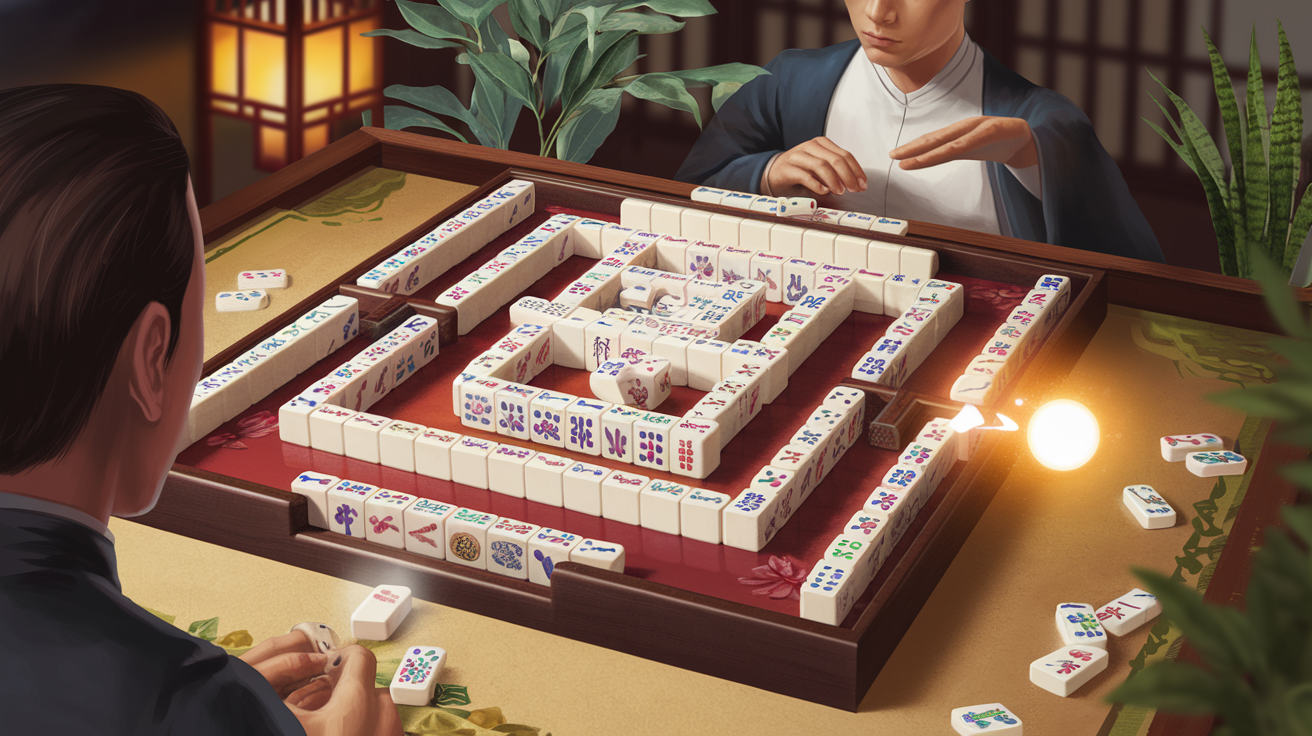
The Hint Paradox: How Online Mahjong's Hint System Can Help or Hurt Your Game
When I first started playing online mahjong solitaire seriously, I treated hints like oxygen—gasping for them the moment I faced uncertainty. Every time the board looked complicated, I'd click that glowing lightbulb icon without hesitation. My win rate climbed quickly, and I felt accomplished.
Then something happened: I stopped improving.
The hints had created a psychological trap. I'd become dependent on external validation of my moves rather than developing the critical thinking skills that separate competent players from exceptional ones. When I finally played on a platform without hints (or where they were limited), I discovered massive gaps in my pattern recognition and forward-planning abilities. The win rate that looked impressive? It evaporated.
This experience taught me something crucial about the hint system in online mahjong: it's not inherently good or bad. Like most powerful tools, its value depends entirely on how you use it.
Understanding the Dual Nature of Hints
When Hints Actually Help
Hints serve a legitimate purpose when used strategically. In genuine learning moments, they function like a coach's correction during practice:
Perspective shifts: Sometimes you're stuck not because you lack skill, but because you've developed tunnel vision about the board. A hint showing an alternative approach retrains your pattern recognition.
Momentum breaking: When you're genuinely blocked (a legitimate dead-end board state), a hint prevents frustration-driven abandonment and keeps you engaged with the puzzle.
Early-game foundation building: If you're new to mahjong solitaire, a few hints help you internalize the fundamental principle that board state management matters more than grabbing every obvious pair.
Strategic education: When a hint reveals a move you wouldn't have considered, followed by reflection on why it worked, you're gaining genuine insight.
When Hints Actually Hurt
Conversely, hints become detrimental when they replace thinking:
Reflexive clicking: Using hints because you're slightly uncertain rather than because you're genuinely stuck short-circuits the struggle that builds pattern recognition. The struggle is the learning.
Avoiding difficult decisions: Mahjong's strategic depth comes from weighing priorities—which pair to take now to maximize future options? Hints eliminate this decision-making process.
False confidence: You can achieve high win rates with hint-dependency while lacking transferable skills. You're not learning; you're just executing suggestions.
Muscle memory atrophy: The more you rely on hints, the less you practice the actual skill of scanning boards, predicting cascades, and planning sequences.
The Hint Budget Framework
After my realization, I developed what I call a "hint budget"—a deliberately limited allocation of hints per session. This approach treats hints as a finite resource rather than an unlimited crutch.
How It Works
Set a session budget: Decide before playing that you'll use a maximum of 2-3 hints per session, regardless of how many games you play.
Reserve them strategically: Don't spend your hint budget on the first challenge. Instead, invest 10-15 minutes of genuine problem-solving before considering a hint.
Use them for signal detection: When you finally use a hint, study it. Why did the system recommend that move? What pattern were you missing? This reflection converts a hint from a shortcut into a learning moment.
Gradually reduce: Start with 3 hints per session, then move to 2, then 1. Eventually, challenge yourself to hint-free sessions entirely. Track what you learn: Keep notes on hints you use. Over time, you'll see patterns in your blind spots.
The Well-Implemented Hint System at TheMAHJONG.io
When examining how platforms approach this feature, theMAHJONG.io demonstrates thoughtful design. Their hint system includes:
Clear visual feedback: Hints highlight specific pairs rather than vaguely pointing you toward the board, making the guidance immediately actionable and educational.
Hint counting: The platform tracks your hint usage, creating subtle accountability that encourages intentional rather than reflexive use.
Accessibility without manipulation: Hints are available but not pushed—no aggressive notifications or dark patterns trying to make you dependent.
This design respects player autonomy. The system exists for those who need support, but it doesn't design for addiction or dependency.
Practical Implementation
Here's how to establish your own healthy hint relationship:
Week 1-2: Play with your full hint budget (let's say 3 hints per session). Document every hint you use.
Week 3-4: Reduce to 2 hints. Before using one, commit to 15 minutes of board analysis.
Week 5-6: Move to 1 hint per session. Defend its use—it should only happen when you're genuinely stuck, not uncomfortable.
Week 7+: Challenge yourself to hint-free sessions. You'll be surprised how quickly the patterns emerge when you remove the crutch.
The Deeper Lesson
The hint paradox reveals something important about skill development in any domain: shortcuts often prevent mastery. The discomfort of being stuck—that moment before you use a hint—is where learning happens. Your brain is under genuine pressure to solve the problem, which accelerates pattern recognition.
Hints should be the exception, not the default. They're for moments when you've legitimately exhausted your current capabilities, not for every moment of difficulty.
The goal isn't to achieve high win rates through external assistance. It's to develop the cognitive patterns that make high win rates inevitable, regardless of whether hints exist. When you can play competently without hints, the hints become tools for refinement rather than crutches for survival.
Use hints intentionally. Use them sparingly. But most importantly, use them to become the kind of player who doesn't need them.
