

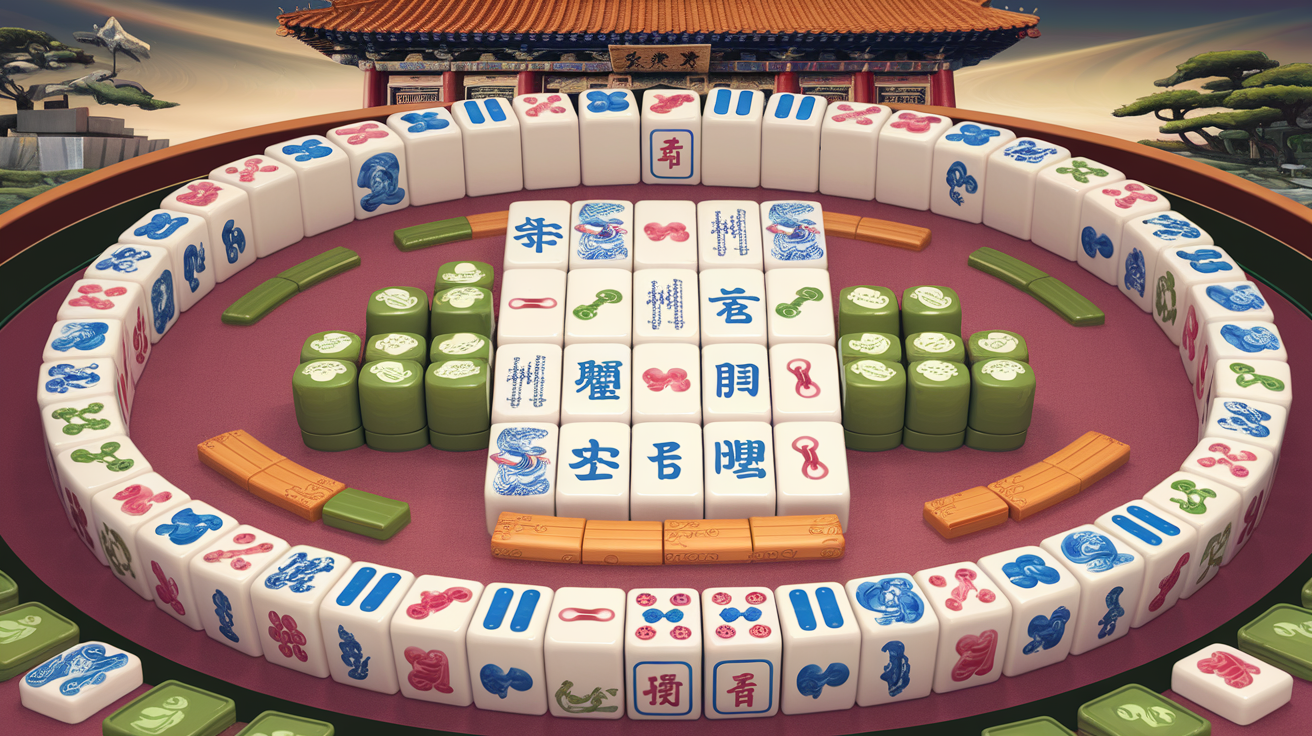
Mastering the Hint System: Strategic Learning vs. Skill Shortcut in Online Mahjong
The hint button gleams on your screen. You've been staring at the board for thirty seconds, and the moment you feel that familiar flutter of uncertainty, your finger hovers over it. One click, and the problem dissolves. The tiles light up. You make the match. You move forward.
But here's what I learned the hard way after hundreds of online mahjong sessions: that click is either a stepping stone to mastery or a crutch that quietly erodes your strategic foundation.
The Hint Trap: How Over-Reliance Rewires Your Brain
When I first started playing mahjong solitaire online, I treated hints like they were unlimited. My reasoning was simple: "Why struggle when the answer is right there?" Each puzzle I completed felt like a win, but I was winning at the wrong game entirely.
The real cost became apparent after a few weeks. When I deliberately played without hints, I discovered I couldn't identify obvious matches that my brain had never been forced to recognize. I'd developed a learned helplessness around pattern recognition. My eye didn't scan boards the same way. I was looking for the hint, not for the solution.
More insidiously, I never developed the mental discipline that mahjong actually demands. The game isn't just about finding matches—it's about understanding which matches to take and when. Knowing that a pair exists is only half the skill. Knowing whether removing it now opens your board or locks you into a dead end is the other half. Hints give you the first; they actively prevent you from learning the second.
When Hints Actually Help (And When They Don't)
Hints That Serve Your Learning
Early pattern recognition: When you're genuinely unfamiliar with tile matching, hints are genuinely useful. They show you what to look for, teaching your visual cortex the anatomy of a valid pair.
Breaking mental blocks on specific puzzles: Sometimes you've stared at a board for three minutes and genuinely cannot see a move. A hint here isn't weakness—it's a way to continue practicing rather than quit in frustration. One strategic hint prevents you from developing the harmful habit of abandonment.
Reviewing your mistakes: Using hints after attempting a puzzle helps you understand where you miscalculated. This is active learning, not passive consumption.
Hints That Sabotage Growth
Reflexive hint-use: Clicking after ten seconds of genuine thought prevents you from sitting with difficulty long enough to develop spatial reasoning.
Avoiding the strategic layer: When you use hints to skip the decision about which move to make and only focus on making a move, you're practicing execution without understanding.
Building speed without skill: Hint-assisted fast times feel good but are statistically meaningless. You're not faster—the hints are.
The Hint Budget Framework: Intentional Learning Through Constraints
Instead of hints as an unlimited resource, I adopted what I call a "hint budget"—a fixed allocation per session that forces intentional choice.
Tier 1: The No-Hint Session (Baseline)
Once weekly, I play with zero hints. These sessions are humbling and invaluable. I don't always win, but I always learn exactly where my current ceiling is. My mistakes reveal my blind spots.
Why this works: Without the safety net, you engage your full problem-solving apparatus. You develop tolerance for complexity. This is where real pattern recognition builds.
Tier 2: The Limited Budget (3-5 Hints Per Session)
Most of my play falls here. I get 3-5 hints, which forces me to use them strategically. Early in a puzzle, I resist. I know I'll probably need them later, and this scarcity mindset changes everything.
Why this works: You learn to distinguish between "genuinely stuck" and "temporarily frustrated." You get comfortable sitting with 60-90 seconds of active difficulty before accessing help. You build resilience.
Tier 3: The Learning Session (Unlimited Hints, Conscious Use)
When learning a new difficulty level or studying patterns you've never seen, unlimited hints serve as coaching. But the key is studying—you're actively asking "why is this the right move?" rather than passively accepting it.
Why this works: Hints become a learning tool rather than an escape. You're in tutorial mode, not evasion mode.
The Implementation at themahjong.io
What makes the hint system at themahjong.io particularly well-designed is that it's proportional to difficulty. Harder boards give you more hints, which is pedagogically sound—you're not being penalized for facing legitimately complex challenges while you're still building skill. Yet the hints are still finite, which maintains the pressure that builds real competence.
Moreover, the visual design—the way hints highlight matches on the board—shows you not just that a match exists but where it is spatially, which trains your eye to scan with intention. Over time, you internalize these scanning patterns. This is hint design that actually accelerates skill development rather than replacing it.
Making It Personal: The Real Question
Here's the crucial distinction: Can you choose to not use a hint you could use?
If the answer is "not really," then hints are running your sessions rather than serving them. That's the moment to implement a budget system.
The hint button isn't the enemy. Reflexive thinking is. Mahjong is a game of recognition, strategy, and patience—and none of those develop faster than you're willing to sit with difficulty. Hints accelerate your journey only when you use them with intention.
Your Challenge This Week
Try one no-hint session. You'll likely lose. You'll also learn more in that session than you have in your last five hint-assisted victories combined. What you'll discover is that the real skill isn't in finding matches—it's in becoming the kind of player who wants to find them yourself.
