

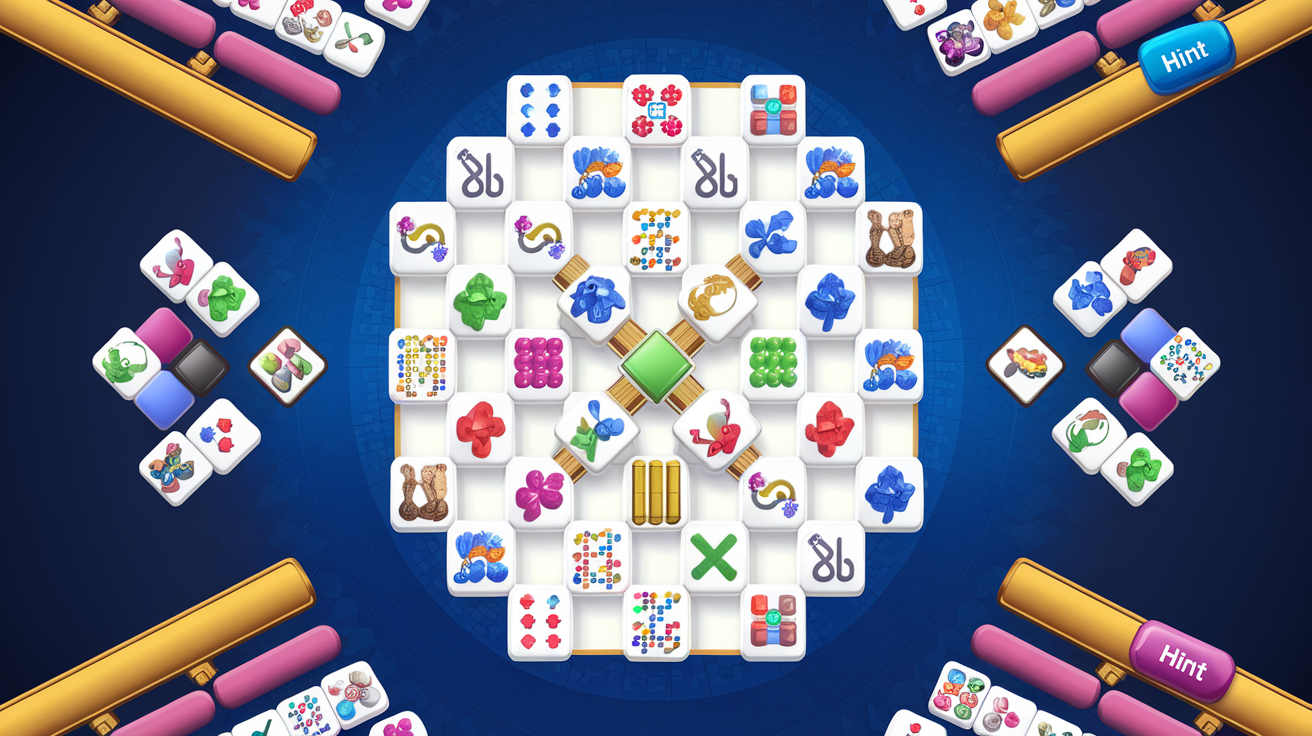
Mastering the Mahjong Hint System: Strategic Learning Through Intentional Restraint
The hint button sits there, glowing softly in the corner of your screen. You're stuck on a tile combination you don't understand. One click and the problem vanishes. It's tempting—maybe too tempting.
I learned this lesson the hard way.
The Trap of Reflexive Hint-Clicking
When I first started playing online mahjong seriously, I treated hints like a crutch. Stuck for more than thirty seconds? Click. Unsure about a move's consequences? Click. The hint system at platforms like themahjong.io is designed with elegant simplicity—it shows you exactly which tiles match, removing all guesswork.
But that elegance became my weakness.
Within two weeks, I could breeze through easy games but hit a wall at medium difficulty. I'd developed speed without developing sight. I couldn't identify tile combinations without external guidance. More critically, I'd never trained the pattern recognition that separates casual players from skilled ones. I could follow the breadcrumbs, but I couldn't read the forest.
The real cost? Strategic tunnel vision. Good mahjong play isn't just about finding valid matches—it's about understanding board position, predicting blocked tiles, and maintaining multiple solution paths. Every hint I'd reflexively clicked was a lesson I'd never learned. I was outsourcing my thinking rather than developing it.
When Hints Actually Help
Hints aren't inherently bad. They're tools, and like any tool, their value depends entirely on how you use them.
Hints genuinely accelerate learning in these specific scenarios:
Learning new tile set patterns. If you're unfamiliar with a particular mahjong variant or special tile designs, hints clarify which tiles actually match. This prevents frustration from visual confusion and lets you focus on the actual game mechanics.
Breaking genuine deadlocks. Sometimes a board state genuinely blocks you—not because you lack skill, but because the puzzle design creates a legitimate bottleneck. A single hint can unstick you and let you continue learning from subsequent moves.
Analyzing strategic mistakes. After using a hint, study why that combination was relevant. What did you miss about the board state? This turns a hint into a teaching moment rather than a shortcut.
Calibrating difficulty. Using hints judiciously on harder games helps you understand what separates difficulty levels. This builds intuition about board complexity.
When Hints Prevent Skill Development
The opposite is equally true. Hints actively damage your development when:
You use them reflexively. The moment you feel discomfort, you click. This trains your brain to outsource problem-solving rather than persist through difficulty. Pattern recognition develops through struggle, not avoidance.
You're rushing. Hints mask slow thinking. Real skill includes the ability to scan complex boards methodically. Speed without accuracy is false progress.
You're playing games within your current skill range. If you're clicking hints on easy or medium games, you're preventing the neural pathways that recognize basic patterns from solidifying. You need to struggle slightly with your appropriate difficulty level.
You never review the hint. Clicking a hint then moving on wastes the learning opportunity. The hint should prompt reflection: "Why didn't I see that? What pattern was I missing?"
The Hint Budget Framework: Intentional Learning
Here's what transformed my play: the hint budget.
Instead of unlimited hints, I imposed a session structure:
- Easy games: 0 hints (or 1 maximum, only if genuinely stuck after 60+ seconds of study)
- Medium games: 2 hints per game
- Hard games: 3 hints per game
- Expert games: 5 hints per game
The specific numbers matter less than the principle: you have limited hints, and each one is valuable.
This creates psychological accountability. You stop clicking reflexively because you're rationing a resource. Each hint becomes a deliberate choice, not a default response. You're more likely to spend 45 seconds analyzing before claiming your hint.
The progression is intentional too. On easier games where you should be developing foundational pattern recognition, hints are scarce. On harder games where you're learning advanced strategy, you have more room to learn through guided assistance.
Most importantly, the budget forces you to succeed without hints most of the time. This is where skill actually develops.
The Well-Implemented Hint System
Not all hint systems are created equal. A well-implemented hint feature—like the one at themahjong.io—has several characteristics:
Visual clarity. The hint immediately shows which tiles match, removing ambiguity about whether a match exists. This separates visual confusion from strategic uncertainty.
Minimal information. A good hint shows you one valid move, not all possible moves. This leaves discovery intact while providing guidance.
Natural integration. The hint button shouldn't be aggressive or constantly encouraging. It should sit quietly available, a tool you choose deliberately.
Session tracking (optional). Some systems show how many hints you've used. This supports self-imposed budgeting without imposing external restrictions.
Your Hint Budget in Practice
Here's how to implement this framework:
Set your budget before starting. Decide in advance how many hints you'll allow yourself. Write it down or set a mental note.
Establish a personal rule for when hints are permitted. Maybe: "Only after 45+ seconds of active study," or "Only when I genuinely cannot identify any valid matches."
Track your hints honestly. Count them. The friction of counting reinforces intentionality.
Review each hint immediately. Ask yourself: "Why didn't I see this? What pattern was I missing? How do I recognize this in the future?"
Play within your difficulty range. Your hint budget should mean you succeed without hints most of the time. If you're exhausting your budget regularly, you're playing above your current skill level—which might be good challenge, or might be frustration disguised as learning.
Increase difficulty as your hints become surplus. If you're consistently finishing games with hints unspent, you've outgrown that difficulty level.
The Long View
Mastering mahjong isn't about moving fast through games—it's about developing the ability to see board states clearly and respond with confident strategy. Hints are accelerators, not replacements, for that development.
The players who advance fastest aren't those who use hints most liberally. They're the ones who use hints least, but use them deliberately. They've created systems—like the hint budget—that transform tools from crutches into genuine learning devices.
Your hint system should serve your growth, not your comfort. With intentional structure, it absolutely can.
Start Your Journey
If you're ready to develop real mahjong skill, try setting your hint budget today. Play at themahjong.io with a specific limit in mind. Notice how the constraint changes your approach. The discomfort of scarcity forces the kind of thinking that builds lasting skill.
The hint button will still be there when you need it. But when you truly need it—not just when you feel stuck—that's when it becomes a tool that matters.
