

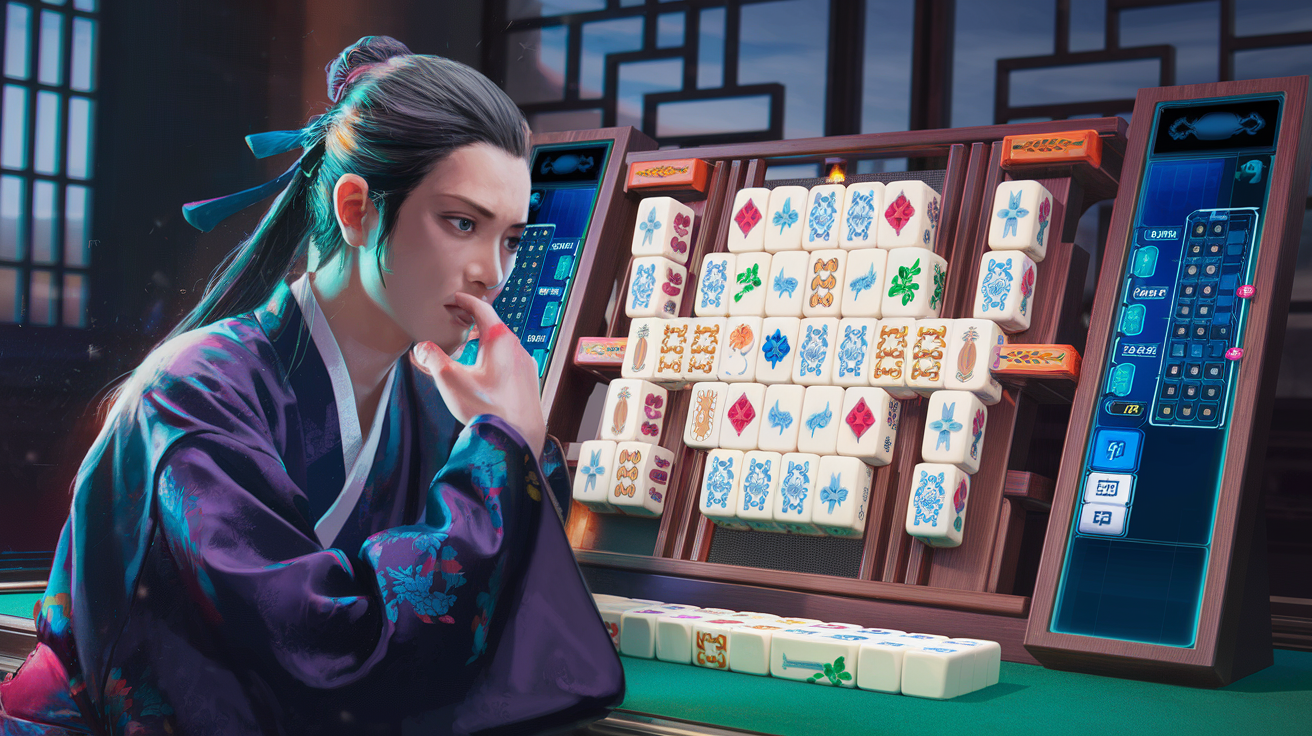
The Mahjong Hint System: Strategic Tool or Skill Crutch?
When I first started playing online mahjong solitaire, I developed a nervous habit: click stuck, immediately hit the hint button. One move unlocked, puzzle solved, dopamine hit delivered, next round. After a hundred games, I realized something troubling—I'd gotten faster at following hints but no better at finding moves myself. My strategic thinking hadn't evolved. I was outsourcing the hardest cognitive work to an algorithm.
That realization led me down a deeper investigation into how hint systems work, when they help, and more importantly, when they actively sabotage skill development. What I discovered is that hints aren't inherently good or bad. They're neutral tools—and like any tool, their value depends entirely on intentional deployment.
When Hints Genuinely Help
Let's be clear: hints serve legitimate purposes in mahjong solitaire. The question isn't whether to use them, but when and why.
Early Game Learning If you're new to mahjong solitaire—genuinely unfamiliar with tile recognition, seasonal groupings, or how removal mechanics work—hints can compress months of learning into weeks. A few well-placed hints early can show you what's possible before you've internalized the spatial patterns. This is pedagogically sound. You're learning the game's possibility space, not relying on hints to solve the puzzle.
Pattern Recognition Acceleration Mahjong has deep pattern-matching requirements. Experienced players see chains—sequences of moves that open cascades. Newer players see only the next move. Hints can illuminate these chains, showing you "oh, that's how those three moves connect." You're essentially studying endgame positions. The hint becomes a coach, not a crutch.
Unsticking Genuine Impasses Occasionally, you'll hit a board state where the correct move is genuinely invisible—it violates your current mental model of the game. Perhaps you missed that two tiles were adjacent beneath removed pieces. A hint here teaches you something about how you see the board, not just "what move is next."
Confidence Building For anxious players or those returning after breaks, hints can rebuild confidence without sacrificing learning. One correct hint, one successful completion, and momentum returns. This is valid if you're using it to rebuild, not avoid the difficulty.
When Hints Become Obstacles
This is where my early experience becomes instructive.
The Reflexive Habit The moment hint-clicking becomes automatic—when your first instinct upon slight difficulty is to hit the button—you've crossed from tool use into avoidance. Your brain has delegated the hard work. What you're training is hint-following speed, not decision-making. This is insidious because you feel like you're playing while actually just executing.
Strategic Blindness Mahjong rewards three thinking modes:
- Immediate tactics: What move is available now?
- Position mapping: How do available moves reshape the board?
- Strategic foresight: Which current move best preserves winning paths five moves ahead?
Hints typically address mode #1. If you rely on them, you never develop modes #2 and #3. You become tactically competent but strategically blind. In championship-level play, this is devastating. Your opponent doesn't just see the next move—they see three moves ahead and plan accordingly. Hints can't teach you that because it requires struggle—the cognitive friction of considering multiple futures and living with uncertainty.
Difficulty Calibration Loss When hints are unlimited and reflexively used, the game's difficulty signal vanishes. You don't know if a board is genuinely hard or if you're just hint-dependent. This means you can't calibrate your skills. Are you improving? Playing harder boards? You genuinely won't know.
The Frustration-Learning Sweet Spot Psychological research calls this "productive struggle." The moment where you're genuinely stuck but still attempting to solve it—usually 30-90 seconds of focused thinking—is where deep learning happens. Hints short-circuit this. They feel helpful (problem solved!), but they rob you of the neural consolidation that comes from generating your own solutions.
The Hint Budget Framework: Intentional Skill Development
Instead of "hints on demand," I now recommend treating hints like a strategic resource—a budget per session.
How It Works
Tier 1: No Hints (Skill Building Mode) Play 2-3 rounds without using any hints. Force yourself into genuine difficulty. If you fail or take 10+ minutes, that's data—you've found your learning edge. The next tier uses hints to understand what you missed.
Tier 2: Rationed Hints (Learning Mode) Play 3-4 rounds with a maximum of 2-3 hints per game. Before using a hint, enforce a 60-second thinking rule. Write down your confused position. Then use the hint and analyze why your assumption was wrong. This transforms hints into diagnostic tools.
Tier 3: Unlimited Hints (Exploration Mode) Play 1-2 relaxation rounds where hints are unlimited. This is when you explore aggressive strategies, experiment with board reading, or rebuild confidence. No learning expected; this is play for enjoyment.
Why This Works
The budget creates scarcity, which forces intentionality. You stop reflexively clicking because you've budgeted your hints like poker chips. The thinking rule prevents the habit of immediate resignation. The tier structure acknowledges that learning has different phases—sometimes you need pressure, sometimes you need safety.
Most importantly, this framework separates playing mahjong from developing mahjong skills. They're not the same activity. Tier 1 and 2 build skills; Tier 3 consolidates them through play.
The themahjong.io Approach
Well-designed hint systems recognize this nuance. At themahjong.io, the hint feature is implemented thoughtfully—it's available but not aggressive, visible but not intrusive. This design respects player agency. The hints are there if you choose them, which is fundamentally different from systems that bombard you with suggestion popups or make hints seem like the intended solution path.
The best hint systems acknowledge that they're learning scaffolding to be gradually removed, not permanent crutches. A good online mahjong platform trusts players to develop their own hint framework—and tools like those at themahjong.io enable rather than dictate that development.
The Path Forward
If you find yourself over-relying on hints, here's the honest truth: stepping back feels harder initially. The first no-hint round will be slower and more frustrating. But within 3-4 sessions of the hint budget approach, something shifts. Your board reading accelerates. You start seeing moves before consciously computing them. You develop intuition.
That intuition—the ability to feel where the right move is even before you can articulate why—is what separates competent mahjong players from skilled ones. Hints can't teach it. Only struggle can.
Use hints intentionally. Respect them as tools, not solutions. Budget them like they're precious. And most importantly, challenge yourself to play without them regularly. The difficulty is where the growth lives.
