

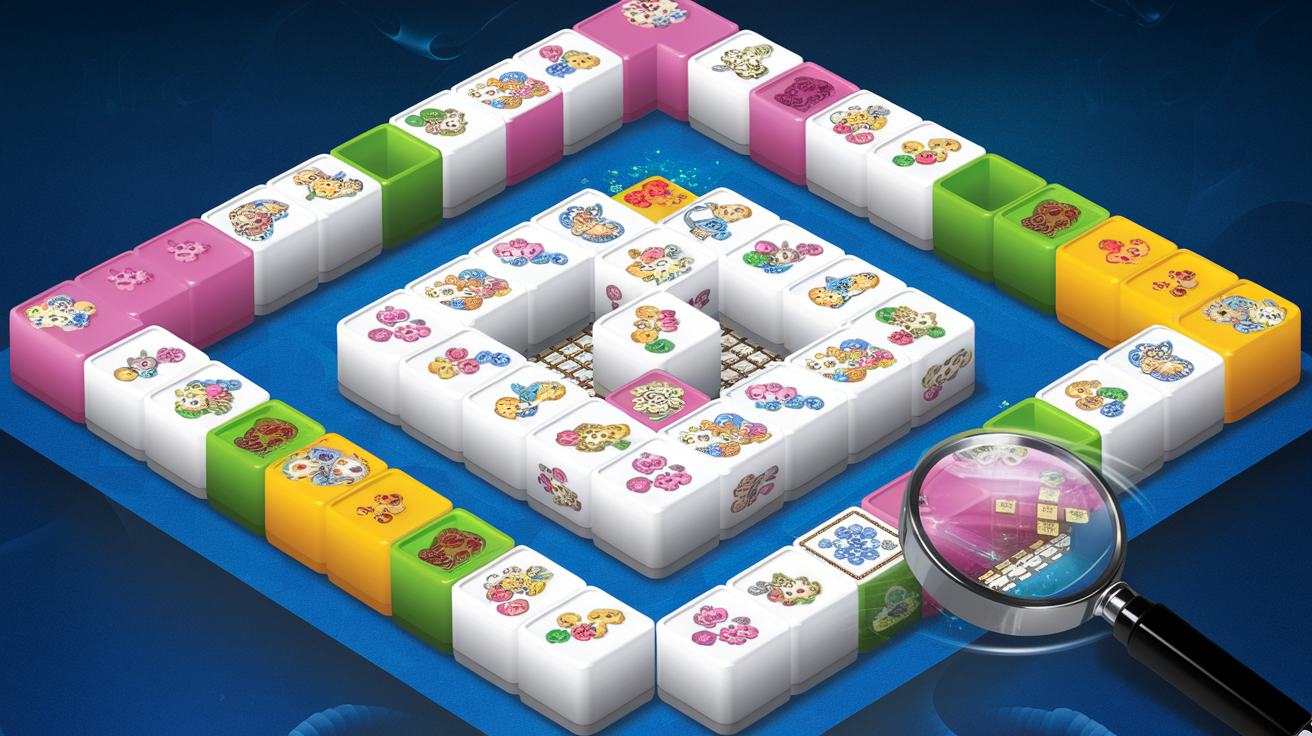
The Mahjong Hint Dilemma: When Guidance Helps vs. When It Hurts Your Game
When I first started playing online mahjong solitaire seriously, I discovered something that felt almost shameful: I couldn't stop clicking the hint button. A tile pair didn't jump out immediately? Hint. Unsure if I'd made the right choice? Hint. Stuck for more than ten seconds? Hint. Within a few weeks, I could complete most boards, but I still felt like a beginner.
It wasn't until I stopped relying on hints that I realized what I'd been missing: the cognitive struggle itself is where learning happens.
Today's online mahjong platforms, including themahjong.io, make hints readily available—often unlimited or with generous allocations. This accessibility is both a gift and a trap. Understanding when hints serve your development and when they sabotage it is the difference between becoming a truly skilled player and becoming someone who can complete games without understanding why.
The Case for Strategic Hints
Let's be clear: hints aren't inherently bad. They serve specific, legitimate purposes in mahjong solitaire development.
Hints work best when:
- You're learning the rules. If you're new to mahjong solitaire and don't yet understand which tiles can be matched, hints help you grasp the fundamental mechanics without frustration derailing your learning.
- You're studying advanced patterns. When you encounter a complex board state and want to see how an expert would approach it, a hint reveals strategic thinking you might not have considered.
- You're genuinely stuck (after real effort). If you've spent several minutes analyzing a board, made genuine attempts at different move sequences, and still can't find a legal pair, a hint can unstick you without robbing you of the learning moment.
- You're recovering from an unfortunate board. Mahjong solitaire sometimes presents unwinnable states due to earlier moves. A hint here can help you understand what went wrong and reset your mindset.
In these scenarios, hints function like a coach's instruction—they arrive after you've attempted the work, and they illuminate something you couldn't quite grasp alone.
The Hidden Cost of Reflexive Hints
But hints become harmful when they become habitual.
When I finally examined my hint-heavy play style, I noticed something alarming: I wasn't developing the core skill of pattern recognition. Mahjong solitaire, at its heart, is about spotting which tiles can be matched and predicting cascading consequences. By reaching for hints before my brain had time to fully engage with these puzzles, I was outsourcing the very cognitive work that builds expertise.
This had measurable consequences:
- Slower intuition. On boards without hints available, my decision-making became labored. I'd second-guess myself constantly because I'd never internalized the patterns.
- Weak strategic planning. I couldn't predict how my current move would affect future board states. Hints had shown me individual correct moves, but not the reasoning behind them.
- Plateau effect. My win rate stopped improving. I could complete easier boards easily, but hard boards defeated me—I simply lacked the judgment hints had circumvented.
- Lower satisfaction. Paradoxically, winning with hints felt hollow. The struggle, brief as it was, disappeared, and victory lost its meaning.
This is the paradox of easy access to help: it prevents the discomfort necessary for growth.
The "Hint Budget" Framework
Rather than swearing off hints entirely—which, for casual players, is unnecessarily punitive—I discovered that a tiered hint budget provides structure without eliminating support when genuinely needed.
Here's how it works:
Define Your Session Allocation:
- Allocate a fixed number of hints per play session (e.g., 3-5 hints for a 30-minute session).
- This isn't a hard rule; it's a guardrail that encourages intentionality.
Use Hints Strategically:
- Reserve hints for moments when you've genuinely struggled or need to understand advanced patterns.
- Before using a hint, ask: "Have I spent 30+ seconds really analyzing this board? Is my goal understanding, or am I avoiding effort?"
Review Hinted Solutions:
- When you use a hint, don't just click the suggested move—pause and think about why that move works and what it accomplishes.
- Notice if the hint revealed a pattern you should have caught.
Track Your Progress:
- Play some boards without using your full budget. Notice how your decision-making improves over sessions.
- Most players find that as their pattern recognition improves, they naturally use fewer hints.
Adjust by Difficulty:
- On easier boards, use zero hints. These should feel almost automatic.
- On medium boards, allow 1-2 hints if needed.
- On hard boards, you might use all your allocated hints—and that's appropriate, because you're learning from higher-complexity patterns.
How themahjong.io Implements Hints Well
themahjong.io's hint system exemplifies thoughtful design. Rather than unlimited hints that encourage dependency, the platform uses a limited hint allocation that resets per session. This structure naturally encourages the habit budget approach without requiring external discipline.
The platform also provides transparency—you can see how many hints remain—which makes the choice to use one feel more deliberate. And crucially, when you use a hint, it highlights a valid move without immediately executing it, allowing you to understand the move before confirming it.
This design respects both beginners (who need support) and advancing players (who benefit from constraints).
From Reflexive to Intentional
The shift from mindless hint-clicking to strategic hint-use represents a maturation in how you approach mahjong solitaire. It's the difference between consuming a game and engaging with it deliberately.
Over months of using the hint budget approach, I noticed my intuitive move recognition accelerated dramatically. Patterns that once required hints became obvious. My win rate climbed. And winning—especially on hard boards completed without hints—genuinely felt earned.
More importantly, I started enjoying mahjong solitaire more deeply. The brief struggle became satisfying rather than frustrating. The challenge felt appropriate to my skill level. The victory meant something.
Start Your Intentional Practice
If you recognize yourself in my early, hint-heavy approach, consider adopting a hint budget for your next few sessions. You might be surprised how quickly your skill accelerates and how much more satisfying the game becomes when you're not outsourcing the core cognitive work to a system.
The hints will still be there when you genuinely need them. But by using them intentionally rather than reflexively, you'll transform them from crutches into legitimate learning tools.
Try this at themahjong.io—set a hint budget for your next session and see what you discover about your own strategic capabilities.
