

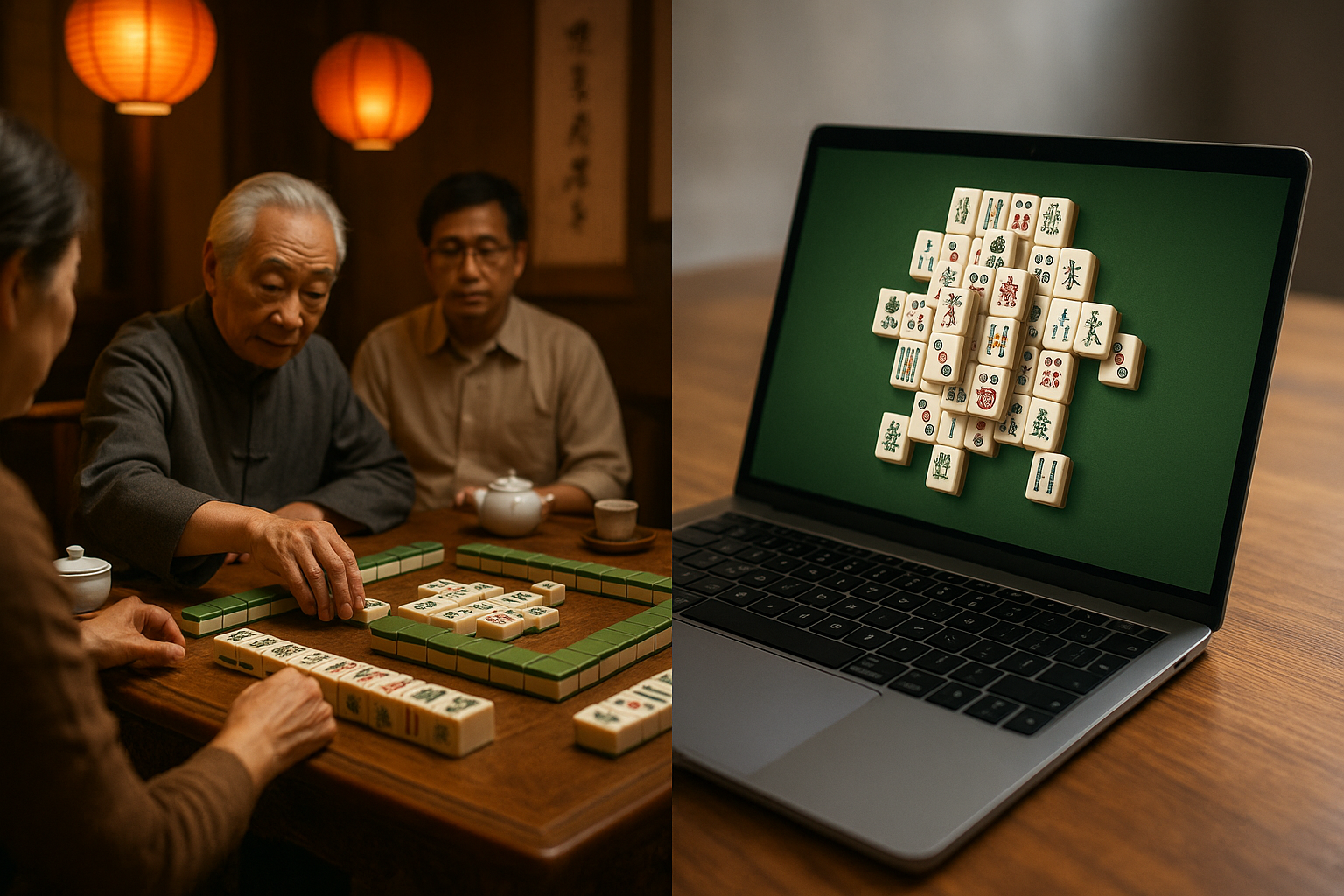
The History of Mahjong: From Ancient Tables to Online Puzzles
I still remember the first time I discovered that the mahjong tiles I was matching on a computer carried centuries of history. The ornate Dragons, Winds, and Seasons weren’t just decoration—they told stories. Have you ever wondered how a game once played in royal courts became today’s global online Mahjong puzzle?
Origins in China
Most historians trace Mahjong back to the Qing Dynasty in 19th-century China. It evolved from earlier card and domino games, influenced by classics like Madiao. Originally, Mahjong was a four-player social game, played with 144 tiles and complex scoring rules. It spread quickly from Ningbo and Shanghai, becoming a favorite pastime among merchants and scholars.
Mahjong Across the World
By the 1920s, Mahjong had traveled far beyond China. Western traders introduced it to Europe and the United States. In America, it sparked a cultural craze—mahjong clubs opened, rulebooks appeared, even fashion trends echoed the tiles.
Different regions adapted the rules:
- Chinese Classical Mahjong preserved traditional scoring
- Japanese Riichi emphasized betting and precision
- American Mahjong introduced jokers and special hands
This variety meant Mahjong could thrive in many cultures.
The Birth of Mahjong Solitaire
The Mahjong most people recognize online—pairing tiles until the board is cleared—was invented much later, in the 1980s. Brodie Lockard created Mahjong Solitaire, inspired by traditional sets.
Unlike the multiplayer version, Solitaire is about pattern recognition and foresight. Its simplicity made it perfect for computers, and it soon became one of the most played free mahjong games worldwide.
Mahjong in the Digital Era
Today, millions play mahjong online free every day. Online platforms have transformed it into a global pastime, offering:
- Relaxation through a relaxing mahjong puzzle
- Pressure-testing skills in Timer Mahjong
- Variety with layouts like Turtle Mahjong or Castle Mahjong
Digital boards didn’t erase its cultural depth—they made it accessible to new generations.
Why the History Matters
Understanding Mahjong’s journey adds meaning to every game:
- Cultural roots show it’s more than a pastime—it’s part of heritage
- Adaptations prove its flexibility across the world
- Online evolution explains why it’s among the best mahjong online games today
When you match Dragons or Winds on a Pyramid Mahjong board, you’re not just solving a puzzle—you’re carrying forward a tradition spanning centuries.
Final Thoughts
Mahjong has traveled from teahouses in China to global popularity online. What began as a social game is now both a cultural treasure and a relaxing digital puzzle.
👉 Next time you start a free mahjong game you can play online, pause to remember: every tile you match is part of a story that began long before the internet.
Which Mahjong symbol—Dragons, Winds, or Seasons—connects most with you?
